Learning English by Playing, Not Cramming
Textbook English and the English people actually speak are two different animals. You can ace a grammar test and still freeze up ordering a coffee.
Cooperative games quietly close that gap. They push learners into using everyday English under a bit of friendly pressure, needing a teammate to understand them in the here and now.
It works because the game is the focus, not the language, so the usual fear of mistakes simply melts away. Here is how cooperative games help people practice real, everyday English without noticing, and why it sticks far better than any drill.

Why Games Beat Drills
Drills train you to pass a test. Games train you to actually talk. For real fluency, that difference is everything.
In a cooperative game, language turns into a tool with a job to do. You are not reciting a table. You are pleading with a teammate for help, yelling a warning, hammering out a plan mid-panic.
Applied linguistics research, some of it flagged by the British Council, keeps circling one finding: meaningful, low-stress use speeds language learning along. A good game serves that up on a plate, buried in enough fun that learners hardly notice the work.
So a game quietly and sucessfully does the motivational heavy lifting a worksheet never could.
What Makes a Game Good for Practice
Not every game builds language. The best ones make communication the only way to win.
Look for games that are:
- Cooperative, so players genuinely have to talk.
- Low-pressure, keeping the fear from using the language.
- Rich in situations, sparks varied vocabulary.
- Actually fun, so learners forget they are studying.
Sandbox games like Minecraft are ideal, since players are forever planning, describing, and haggling out solutions together. A class or group needs a smooth shared world for that, so teachers dig through this low latency minecraft hosting for multiplayer thread to keep the conversation flowing without the usual lag stamping all over it.
Do Not Let the Tech Get in the Way
The whole point is the talking, so the tech has to stay out of its way. Lag is the natural conversation’s worst enemy.
A stuttering server tears the flow apart, and the confidence goes with it.
So groups using games for language work reach for reliable minecraft server hosting best options, leaving the English as the only real hurdle rather than the connection.
Keep the play smooth and learners stay in the moment, which is exactly where real language lives and real learning happens. .
| Game trait | Why it helps English |
|---|---|
| Cooperative | Forces genuine communication |
| Low-pressure | Removes the fear of mistakes |
| Situation-rich | Builds varied vocabulary |
Mixed-ability groups are a quiet strength here. Sit a confident speaker beside a nervous beginner and the stronger one instinctively holds the weaker up, explaining, rephrasing, encouraging, in real English with a real purpose.
No correcting anyone in front of the class. They are just two teammates working a problem, and both forget this is meant to be study. The beginner absorbs phrases in context; the confident one practices being understood ( and revels in being able to show their language skills off a little!)
Free Games on our Site
Not every classroom has access to all the equipment and technology needed of course and on our site we have downloadable classroom and table games you can try out as well for free!
We have given a couple of examples below and if you need more you can check out the games here as well.
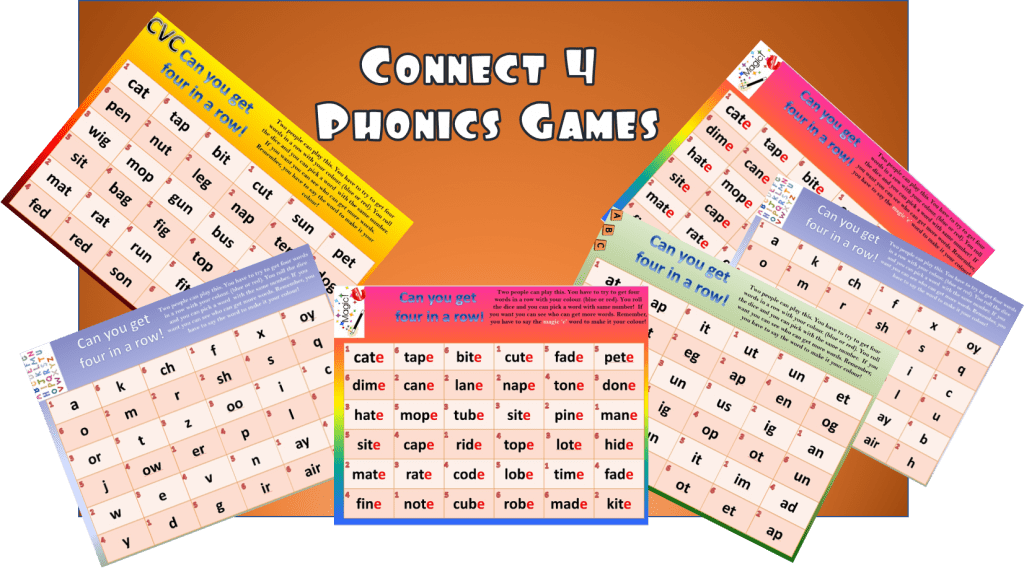
- Connect Four Table Top: We made this as a printable game to help learn, practice and use Phonics skills. It is graded so there are options for simple ABCs to multi Syllable words all can be used in a mixed ability classroom because of this.
- Roll The Dice Games: These are simple ( and liek the connect four game above) levelled games that can be used in mixed ability classroom as well.
- Make your Own Fortune teller: These are the classic folded finger and thumb game with an English Learning twist, these can become a whole hour lesson with the added bonus of students being able to take home a little gift as well just for the cost of a sheet of paper.

Play Your Way to Fluency
Cooperative games flip English practice from a chore into something learners genuinely look forward to. Choose games that make friendly communication the point, keep the pressure off the language, and run them on a smooth server so lag never chops the conversation up.
Do that, and learners get real, everyday English without the fear that shuts them down in a classroom.