FREE Printable Grade 3 Dolch Sight Word Worksheet – “Myself”
The sight word “myself” is crucial for Grade 3 students, enriching conversations about self-reliance, personal experiences, and identity.
This guide, specifically designed for educators, ESL instructors, and parents, presents a printable worksheet to assist children in mastering “myself,” thereby enhancing their ability to articulate personal actions, feelings, and responsibilities.
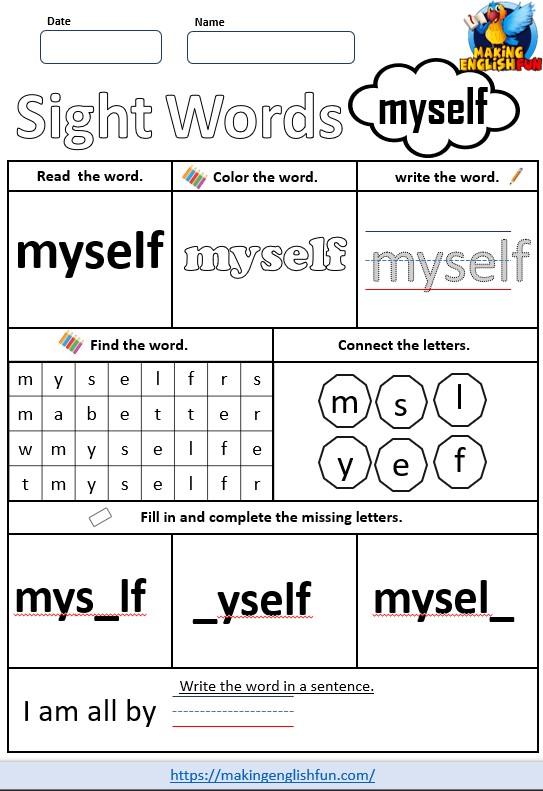
You can see the full grade 3 Dolch Sight Word worksheets sets on the links below.
Importance of Sight Words
“myself” plays a pivotal role in reading fluency and comprehension, helping students seamlessly integrate this reflexive pronoun into their vocabulary.
For third graders, understanding “myself” is key to expressing personal involvement and autonomy in narratives and reflections, making it a valuable term across various contexts.
Free Sight Word ‘Myself’ Worksheet
This worksheet focusing on “myself” includes carefully crafted exercises aimed at deepening students’ understanding and application of this term.
Providing accessible educational materials ensures that all students can advance their expressive capabilities and self-awareness.
Worksheet Features for ‘Myself’
The activities in the worksheet cover:
- Tracing exercises to build comfort and familiarity with “myself.”
- Recognition tasks to enhance identification of “myself” within texts.
- Creative sentence formation that encourages using “myself” in context, reinforcing its usage in depicting personal experiences or actions.
Quick Overview of ‘Myself’
Here’s a snapshot of “myself” and its applications:
| Aspect | Details |
|---|---|
| Sight Word | “myself” |
| Meaning | Used by a speaker to refer to themselves as the object of a verb or preposition. |
| Example | “I made this card by myself.” |
| Type of Word | Reflexive Pronoun |
Using the ‘Myself’ Worksheet
Effective strategies for the “myself” worksheet include:
- Engaging Recognition: Incorporate activities that highlight “myself” in spoken and written contexts for enhanced familiarity.
- Practice Writing: Encourage tracing and writing “myself” to aid memorization, coupled with composing sentences to grasp its contextual use.
- Reflective Discussion: Promote discussions and writing exercises that involve “myself,” facilitating personal reflection and expression.
You can download the printable sight word worksheet below and there are links to full sets of sight word worksheets above and below.
Supplementary Educational Tools
To further support the “myself” worksheet:
- Interactive Platforms: Utilize digital tools that focus on pronouns and personal expression, spotlighting “myself.”
- Quick-Review Flashcards: Employ flashcards featuring “myself” and similar reflexive pronouns for effective reinforcement.
- Selected Readings: Offer texts that use “myself,” encouraging exploration and discussion of personal identity and autonomy.
We have more sight word resources here on the site and you can access these resources below as well.
- 40 FREE Printable Pre – K Dolch Sight Word Worksheets.
- 41 FREE printable grade 3 Dolch Sight Word Worksheets
- 25 Sight Word Games
- Is There An Order To Teach Sight Words?
- Sight Word Spelling Worksheets
- How to teach Sight Words And What Are They?
- Sight Words Worksheets: set 1-20
- Sight Words Worksheets: set 21-40
- 25 Free Kindergarten Sight Word Worksheets.
Creative Engagement with ‘Myself’
Innovative methods to deepen connections with “myself”:
- Personal Narratives: Encourage writing personal stories or diary entries that make frequent use of “myself.”
- Self-Reflection Projects: Engage in projects that explore individual talents, achievements, or experiences, emphasizing the use of “myself.”
- Role-Playing Scenarios: Create scenarios where students can articulate actions or feelings using “myself,” enhancing verbal expression and self-understanding.
Conclusion
The “myself” worksheet is an essential component of the “grade 3 Dolch word worksheets” set, empowering the educational community to nurture students’ skills in self-expression and pronoun use.
Mastery of “myself” not only promotes literacy but also fosters a deeper sense of identity and self-reliance among students, enriching their personal and academic development.
Making English Fun!

I have been a teacher of English for over 15 years, in that time i made hundreds and thousands of resources and learnt so much i think its worth sharing. Hopefully to help teachers and parents around the world.