Blocks, Chats, and Creepers: How Minecraft Can Actually Help Kids Learn English
“It’s actually educational!” is a line heard in almost every household with kids and a gaming console—usually rolled out to negotiate an extra hour of screen time. But with over 350 million copies sold, does Minecraft actually have any real learning value?
When played in English, every item, craftable recipe, and menu requires an understanding of words. But where does genuine language practice happen in this blocky world, and at what point does the game stop teaching without a little guidance from adults?
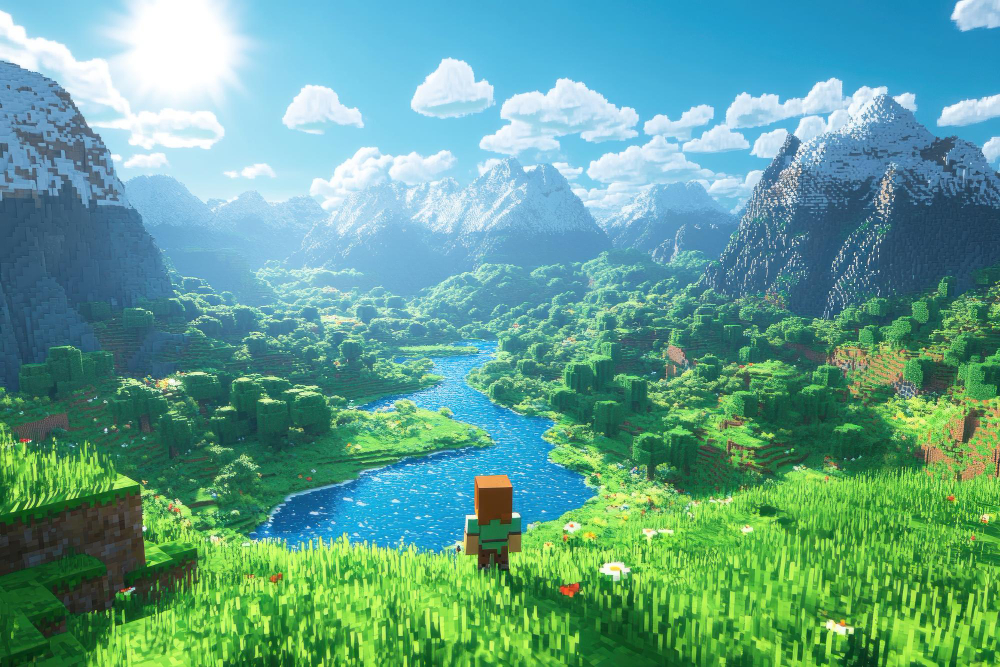
The Chat Box Is Where English Gets Real
The most active English practice in Minecraft doesn’t happen on the crafting screen – it happens in the chat box. Players need to communicate quickly to coordinate: who is mining for iron, who is gathering wood, and who is finishing the shelter before night falls.
This real-time collaboration was highlighted in a 2023 study at Kyoto University. Researchers tracked students completing tasks in Minecraft while communicating exclusively in English. The study found that playing in a low-stakes gaming environment helped learners use everyday vocabulary naturally and consistently, without the anxiety often associated with speaking up in a traditional classroom.
Setting up a small, private server for a class or family creates an ideal language platform. Establishing a simple rule like “English-only chat” turns routine gameplay into functional language practice.
Furnaces, Pickaxes, and Other Words That Stick
Even in single-player survival mode, players are forced to engage with vocabulary. To craft a furnace, you need cobblestone; to mine iron, you need a pickaxe. The game constantly pairs the written word with a concrete visual and an action, reinforcing meaning.
This context-driven learning was evaluated in a study published in the Borobudur Educational Review. Researchers compared eighth-graders using Minecraft in survival mode against a control group learning through conventional classroom methods:
| Metric | Minecraft Group | Traditional Group |
| Average Pre-Test Score | 41 | 40 |
| Average Post-Test Score | 70.5 | 51 |
| Students Passing Threshold | 39% | 15% |
| High Vocabulary Comprehension | 85% | 60% |
| Student Engagement (1–5 Scale) | 4.2 | 3.3 |
While the increase in scores and engagement is noticeable, video games aren’t a magic fix. The students in the study succeeded because gameplay was tied to structured learning tasks. Without specific goals and guidance, gaming alone won’t teach a language.
Where the Game Stops Teaching and Parents Step In
Minecraft does have its limits. Creative mode requires almost no reading, and public multiplayer chats are usually filled with abbreviations, slang, and incomplete sentences rather than proper grammar.
To turn casual gaming into real language acquisition, adults need to bridge the gap. Here are four effective ways to support learning:
- Enable Immersive Reader: Minecraft Education includes a built-in tool that reads text aloud and translates words into dozens of languages.
- Set an “English Only” Rule: Encourage players to write exclusively in English during group play.
- Ask for Build Descriptions: Have your child describe their creations in four or five complete sentences.
- Watch Gameplay Content Together: Stream English Minecraft videos with subtitles turned on, taking time to discuss new vocabulary.
A 2025 case study in the Voices of the English Language Education Society highlighted this effect: children who watched English gaming videos alongside adults naturally picked up over 30 common vocabulary words in a month. Discussing the content helped those words move off the screen and into everyday speech.
Is it Worth the Screen Time
Minecraft will never replace a teacher or a good textbook, but it is a powerful tool for getting kids to use English in a context that actually matters to them.
When combined with clear goals, structured interaction, and a bit of adult involvement, screen time transforms from passive entertainment into functional language practice. The value isn’t just in the game itself—it’s in how you use it.