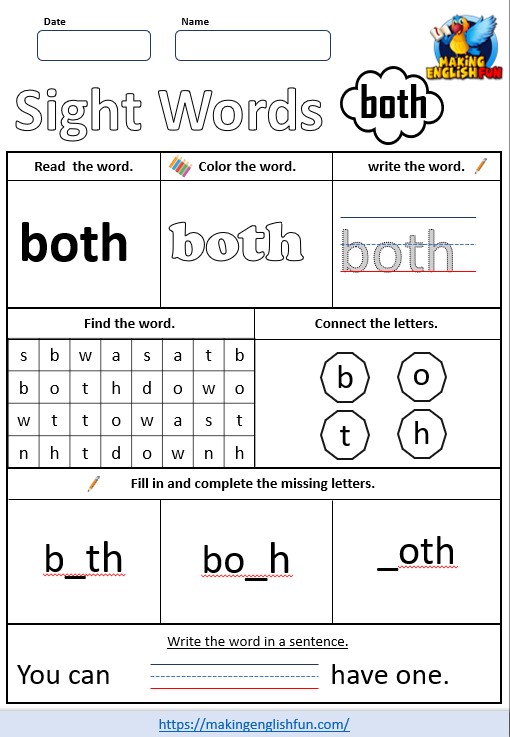
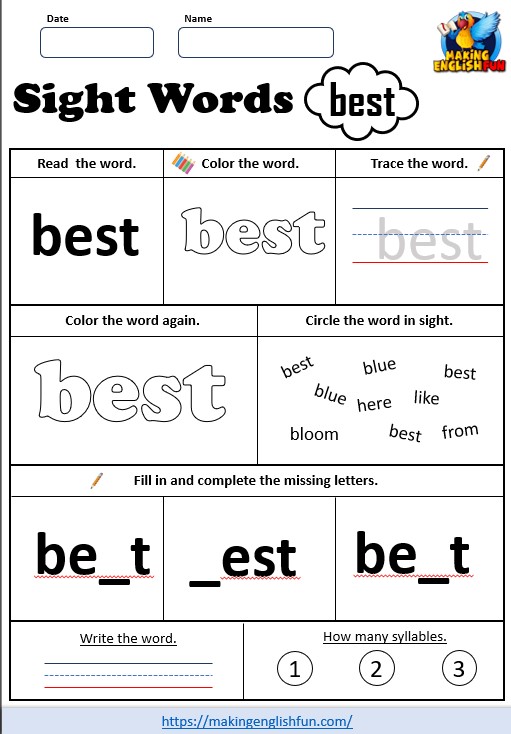
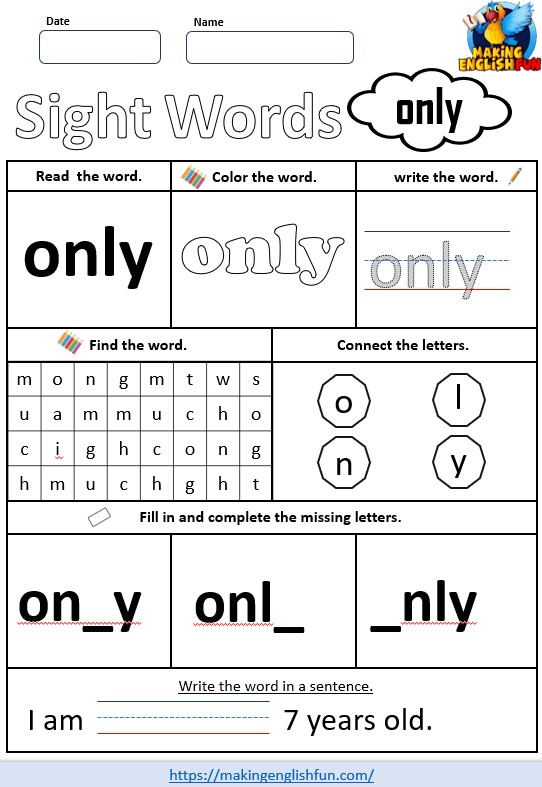
FREE Printable Grade 3 Dolch Sight Word Worksheet – “Only”
The sight word “only” is integral for Grade 3 students, underscoring themes of exclusivity, limitation, and specificity.
This guide, aimed at educators, ESL instructors, and parents, introduces a printable worksheet designed to assist children in mastering “only,” bolstering their capacity to articulate and comprehend scenarios that are singular or unique in nature.
You can see the full grade 3 Dolch Sight Word worksheets sets on the links below.
Importance of Sight Words
“Only” is a key word in developing reading fluency and comprehension, facilitating students’ understanding of texts that denote exclusivity or a particular emphasis.
For third graders, grasping “only” enriches their narrative skills and aids in precise communication, making it a noteworthy term for academic and social use.
Free Sight Word ‘Only’ Worksheet
This worksheet focusing on “only” encompasses exercises aimed at deepening students’ acquaintance with this limiting descriptor.
Accessible educational resources like this are pivotal, ensuring every student can expand their language proficiency and analytical thinking.
Worksheet Highlights for ‘Only’
Activities in the worksheet include:
- Tracing tasks for hands-on learning of “only.”
- Recognition challenges to sharpen identification skills for “only” within texts.
- Sentence-making drills that utilize “only,” enhancing its use in context and solidifying understanding.
Snapshot of ‘Only’
A quick overview of “only” and its application:
| Aspect | Details |
|---|---|
| Sight Word | “only” |
| Meaning | And no one or nothing more besides; solely or exclusively. |
| Example | “He was the only one who knew the answer.” |
| Type of Word | Adverb; Adjective |
Utilizing the ‘Only’ Worksheet
Effective strategies for the “only” worksheet include:
- Engagement with Recognition: Incorporate varied exercises to highlight “only” across spoken and written mediums.
- Practice with Writing: Encourage tracing “only” to aid memorization, complemented by constructing sentences for a clearer grasp of its usage.
- Discussion for Application: Stimulate discussions that involve “only,” fostering its application in real-life examples and theoretical reasoning.
You can download the printable sight word worksheet below and there are links to full sets of sight word worksheets above and below.
Supplementary Educational Resources
Broaden the learning experience with:
- Interactive Learning Tools: Digital platforms that emphasize “only” in context, especially for understanding its grammatical importance.
- Flashcards: Quick-reference cards showcasing “only” for effective practice and language reinforcement.
- Selected Reading Materials: Books and texts rich in “only” usage, promoting discussion and narrative comprehension.
We have more sight word resources here on the site and you can access these resources below as well.
- 40 FREE Printable Pre – K Dolch Sight Word Worksheets.
- 41 FREE printable grade 3 Dolch Sight Word Worksheets
- 25 Sight Word Games
- Is There An Order To Teach Sight Words?
- Sight Word Spelling Worksheets
- How to teach Sight Words And What Are They?
- Sight Words Worksheets: set 1-20
- Sight Words Worksheets: set 21-40
- 25 Free Kindergarten Sight Word Worksheets.
Creative Engagement with ‘Only’
Innovative methods to connect with “only”:
- Creative Writing Prompts: Inspire students to craft stories or descriptions where “only” plays a crucial role, encouraging imaginative use.
- Philosophical Conversations: Engage in thought-provoking discussions about concepts or scenarios where “only” might apply, deepening critical thinking.
- Exclusivity Projects: Tasks or projects that explore the idea of uniqueness or singularity, illustrating “only” in a tangible manner.
Conclusion
The “only” worksheet is a vital tool in the “grade 3 Dolch word worksheets” series, assisting the educational community in cultivating a nuanced understanding of exclusivity and specificity among students. P
roficiency in using “only” not only enhances literacy but also supports precise expression and comprehension of singular scenarios, enriching students’ communication skills and conceptual awareness.
Making English Fun!

I have been a teacher of English for over 15 years, in that time i made hundreds and thousands of resources and learnt so much i think its worth sharing. Hopefully to help teachers and parents around the world.