Simple Sentences For Kindergarten and Printables
Language development during the early years of schooling is a cornerstone of education, setting the stage for lifelong learning and communication. In kindergarten, where foundational literacy skills are introduced and nurtured, the role of simple sentences becomes increasingly important.
Simple sentences for kindergarten are short, clear phrases using decodable and/or familiar simple words like CVC or sight words. They introduce basic structure and vocabulary to help young learners develop the reading, writing, and cognitive skills crucial for young learners’ literacy progress.
We look at what makes a simple sentence for kindergartners here, how to introduce these simple sentences and then provide loads of resources you can use and adapt to your class or home.
Hopefully giving teachers and parents practical examples and strategies to ensure that our youngest learners are equipped with the tools they need for to making their reading a breeze!

We have a whole section of printable, playable and possessable (if that’s a word) resources further down the article for you on how to teach simple sentences to Kindergarten as well.
What is a Simple Sentence?
A simple sentence is a sentence that contains a subject and a verb, and it expresses a complete thought. It’s the basic building block of language, introducing children to the structure and rhythm of written and spoken communication.
For kindergarten students, these sentences are the start of understanding how words come together to convey meaning.
Characteristics Ideal for Kindergarten Students
When crafting simple sentences for kindergarteners, there are key characteristics to keep in mind:
- Short Length: Sentences should be brief, making them easy to understand and remember.
- Basic Structure: They typically follow a straightforward subject-verb-object format.
- Familiar Vocabulary: Using words that children are likely to know or can easily learn.
Building Blocks of Simple Sentences
1. Basic Sentence Structure
The foundation of a simple sentence lies in its structure, typically comprising a subject, a verb, and possibly an object. For kindergarten students, understanding this basic formula is a step towards mastering sentence construction. For instance, in the sentence “The cat runs,” ‘The cat’ is the subject, and ‘runs’ is the verb. Such clarity in structure aids young minds in grasping the essentials of language mechanics.
2. Importance of Clear, Concise Language
Utilizing clear and concise language is paramount in kindergarten. It’s not just about simplicity, but also about making the language relatable and comprehensible. Avoiding complex words or phrases ensures that the children can easily follow along and engage with the learning material.
3. Examples of Common Words
Incorporating common, easily recognizable words can significantly enhance the learning experience. Words like ‘dog’, ‘play’, ‘happy’, and ‘blue’ are not only familiar to most children but also evoke a sense of connection and interest, making the learning process more enjoyable and effective.
4. Examples of Simple Sentences for Kindergarten
Providing examples is a great way to illustrate the concept of simple sentences. Some examples might include:
- “The sun is bright.”
- “We read a book.”
- “My shoe is red.”
Categorizing Sentences
Organizing these sentences into categories based on themes can be an effective teaching strategy.
Categories such as
- daily routines (“I brush my teeth.”),
- nature (“Leaves fall down.”),
- emotions (“I feel happy.”),
- classroom activities (“We draw pictures.”)
- home (“I love my family.”)
help contextualize the sentences, making them more meaningful and relatable for the children.
Let the children be the ones who bounce around not your teaching material!

The Bundle above has 375 pages of reading, Phonics, grammar and games if you want a one stop resource for your classrooms.
Teaching Simple Sentences in Kindergarten
Although we have hundreds, and possibly thousands of resources and ideas on the site, the ones listed below are a good start. If they don’t suit you can find many more free and small charge options with a search.
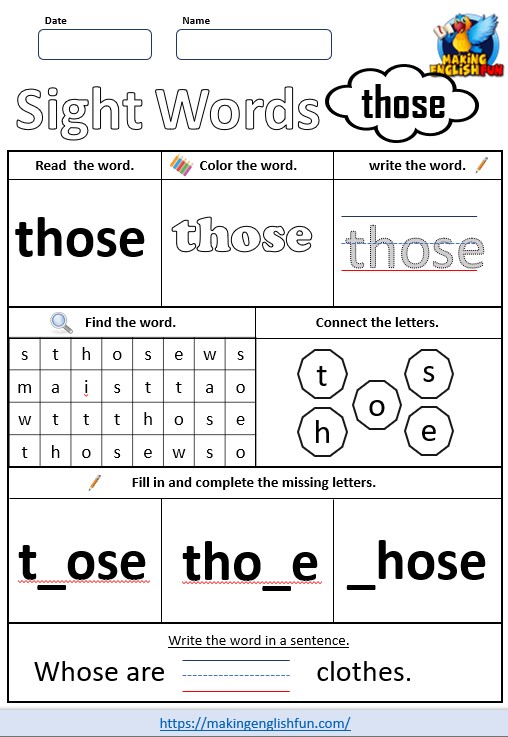
Sentence Scramble Worksheets.
While not the first step to take with early readers and kindergarten students as they become more familiar and aware of things like word order then throwing a “spanner in the works” and asking them to problem solve some simple sentences that have been mixed up is a great learning tool.
The ones we have on this site ( linked in the picture below) are one of our most popular free downloads and also are multiple levels so you can cater for learner differences in your kindergarten class.

We have multiple versions of sentence scramble on the site if you need more selection and you can do a search here.
Sentence Scramble Games
If you are lucky enough to have access to tablets or whiteboards and a pc in your classrooms then using online games, which you can send home to play as well (if we cant keep them off the phone or tablet at least we can make it useful!)
We have a simple sentence scramble game suitable for Kindergarten students, and older actually as well as a Sentence bridgebuilding game as well. We have linked to the Sentence Scramble game here for you.
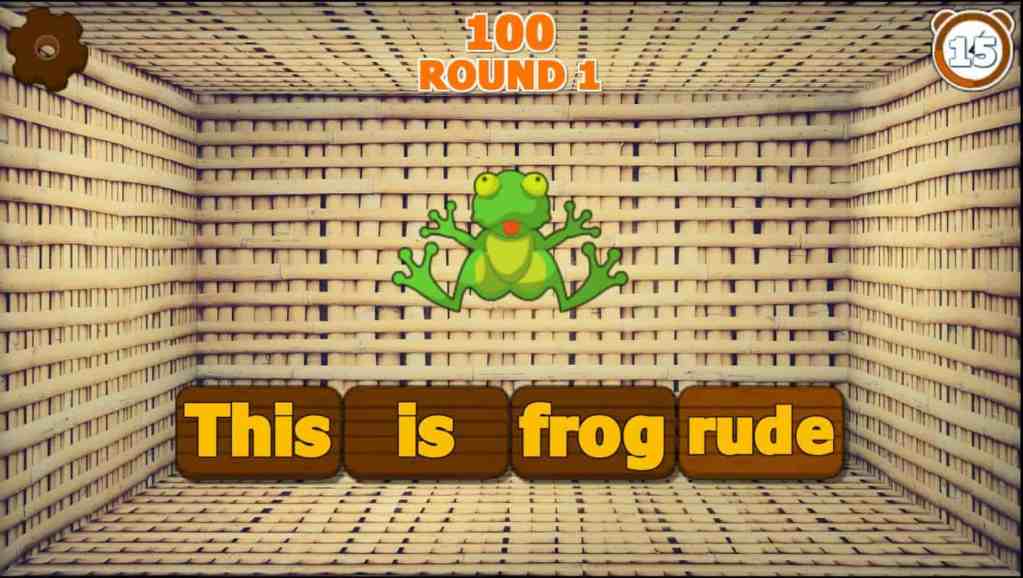
you can play our games right from here, and as we have a few we have done a search for you here as well.
Kindergarten Sentence Reading Passages
Developing pride in work is as essential as students being involved in their own learning, even at this young age. We have designed these Kindergarten reading passages with both those aims in mind, as well as of course practicing reading simple sentences.
We have aimed to use simple word’s to help with decoding as well as simple sight words that they will be familiar with. You can access them from the link in the image. We have CVC, rhyming and sight words readers on the site as well.

Again, hopefully not to be accused of being a one trick pony, we have multiple sets of these you can access from here as well.
Decodable Reading for Kindergarten
Spend longer than 2 minutes on our site and you will know how much we love a bit of phonics on Making English Fun, and our students love them too. The ability to decode words, and then say them, is a gift not just of knowledge but of skills and one that will help them become proficient readers.
With that in mind we have a created CVC and decodable readers for younger learners from Kindergarten to grade 5. These, at kindergarten level, include simple sentences made (mostly) of CVC words. You can grab them below.

There are hundreds of CVC and similar resources on the site, feel free to check them out and use them as you wish.
Simple Sentences for Kindergarten assessments.
Though we have a lot of games on the site, not everything has to have a bouncing animal or tinkling music.
For assessment, or classroom activities we designed a sentence generator. this one linked here is for CVC words, although we have ones for digraphs, Magic e and even passive voice but that one probably wont be needed in a Kindergarten!

It may not be that pretty ( our skills only go so far!) but you just pick a short vowel sound and press the button and it will generate a sentence for you. perfect for pop quizzes and end of class exercises.
Strategies for Everyday Activities
Teachers and parents can incorporate simple sentences into everyday activities. For example, during mealtime, one might use sentences like “I eat an apple” or “The milk is cold.”
These routine-based sentences reinforce language learning in a natural, relatable context.
Interactive Classroom Activities
In the classroom, activities like sentence building games, storytelling sessions, and role-playing can make learning simple sentences interactive and fun.
These activities not only reinforce sentence structure but also encourage children to use their imagination and creativity.
We have a Story Circle activity below which while we have listed as an Icebreaker can be used at any time in a Kindergarten classroom.

Using Storytelling and Picture Books
Storytelling and picture books are powerful tools in teaching simple sentences. Books with short, simple sentences are ideal for beginner readers.
Teachers and parents can read aloud, pointing to words and discussing the story, which helps in reinforcing sentence structure and vocabulary in an engaging way.
While a Big book reader is best, we do have individualized passages you can use here as well – Just click on the picture to be taken there.

CVC and Sight words
Don’t be afraid to step back, or attach any stigma to it. In our opinion one of the greatest skills a teacher or parent can have is to know when they have gone too fast and not be afraid to go back a step. Learning should never be a race.
if you need to go back to teaching phonics, or sight words then do just that. Sometimes it takes a little reminder to kick start that learning process.


Creating Engaging Educational Sentences
The key to crafting engaging simple sentences for kindergarteners lies in their relevance to the children’s daily experiences and interests.
Using sentences that relate to their lives not only enhances understanding but also encourages them to participate and express their own ideas using similar sentence structures.
so try to steer clear from sentences like ” My mortgage is big.”, or “I want a coffee.” where you can! no matter how true they may be.
You can make your own simple sentences for kindergarten or use the ones on our generator or sentence games and worksheets listed below.
Role of Simple Sentences in Kindergarten Education
Aiding in Reading and Writing Skills Development
Simple sentences are the stepping stones to literacy. They introduce kindergarteners to the basics of reading and writing.
By recognizing and understanding these sentences, children begin to decode words and grasp the meaning of what they read and write. This foundational skill is crucial for their academic journey ahead.
Building Vocabulary and Comprehension Abilities
Through simple sentences, children not only learn new words but also understand how these words fit together to convey meaning. This exposure broadens their vocabulary and enhances their comprehension skills.
Impact on Cognitive Development
Simple sentences also play a significant role in cognitive development. They encourage logical thinking and understanding of cause and effect, as seen in sentences like “I water the plant; it grows.”
Such sentences help children make connections between actions and outcomes, fostering critical thinking from an early age.
Challenges and Solutions in Teaching Simple Sentences
Common Challenges Faced
One of the primary challenges in teaching simple sentences to kindergarteners is maintaining their attention and interest. Young learners can easily be distracted or may find repetitive sentence structures monotonous.
Additionally, children at this age have varying levels of language development, making it necessary to tailor the learning approach to diverse needs.
Overcoming Challenges
To overcome these challenges, educators and parents can employ a variety of strategies:
- Interactive Learning: Incorporate games and hands-on activities that make sentence learning more dynamic and engaging.
- Use of Visual Aids: Visual aids like flashcards and picture books can help maintain interest and aid in comprehension.
- Individualized Attention: Recognize and cater to individual learning paces and styles. Some children may need more repetition or visual cues, while others might benefit from more advanced sentences.
- Little and often: Don’t be in a rush to have them all reading Tolstoy by the end of the lesson. Do little sections each lesson or day and their engagement and learning will benefit much more than trying to do too much too quickly.

Conclusion
The journey of mastering simple sentences in kindergarten is a fundamental aspect of early education. These sentences lay the groundwork for literacy, cognitive development, and effective communication.
For educators and parents, understanding the importance of this foundational skill and employing varied, engaging methods to teach it can make a significant difference in a child’s educational journey.
Hopefully the resources and ideas above have your Kindergarteners both reading and importantly enjoying reading simple sentences and readers as quick as they can.
it really does open them up to a whole world of learning.
References and Further Reading
- https://misskindergarten.com/read-reveal-simple-sentences/
- https://www.k5learning.com/free-preschool-kindergarten-worksheets/sentences
- https://www.beginlearning.com/parent-resources/sentences-for-kids/
- https://www.splashlearn.com/blog/simple-sentences-for-kids/
- https://makingenglishfun.com/2021/11/12/how-to-introduce-poetry-to-kindergarten-children/
Making English Fun!

I have been a teacher of English for over 15 years, in that time i made hundreds and thousands of resources and learnt so much i think its worth sharing. Hopefully to help teachers and parents around the world.