Top 5 Online Platforms to Learn Korean with Native Tutors
Most people underestimate how different Korean is from European languages, and that gap shows up fast once you start studying. The best online platforms to learn Korean don’t just teach vocabulary. They help you crack Hangul early, work through honorific speech levels that shift depending on who you’re talking to, and find real speaking time with native tutors. After reviewing dozens of platforms across categories, five options consistently rose to the top. This guide breaks down exactly what each one offers and who it’s best suited for.
While we are of course an English language site, we have a huge number of teachers who are based all over the world who are there to teach English, however learning a little of the local language, as every ESL teacher should tell you, is both respectful and very VERY useful as well.

The research approach for this ranking
Platforms were selected by pulling publicly available data from official websites, user review threads, and language learning community feedback. Only options with a verifiable track record in the Korean language learning space made the cut, with attention paid to tutor quality, lesson structure, and learner outcomes.
-> See the full research breakdown
- italki – Best for live conversational Korean practice with native speakers
- Colloquial Audio – Best for language learning with native speaker audio
- LingQ – Best for language learners seeking authentic content-based study
- LibriVox – Best for free multilingual audiobook learning
- Polly Lingual – Best for live conversation practice and pronunciation coaching with native speakers
Why Picking the Right Online Platforms To Learn Korean Matters
Korean has a reputation for humbling beginners fast, it certainly did me when i tried. Hangul itself is learnable in a few days, but moving from the alphabet to real grammar and vocabulary requires a study environment that actually supports that transition. Then there are the honorific speech levels, which aren’t optional politeness. They’re central to how Korean communication works, and getting them wrong in conversation feels jarring to native speakers.
Choosing the right platform means getting structured exposure to these systems from day one. The difference shows up clearly in daily active study minutes, lesson completion rates, and vocabulary retention over time. Platforms that match your learning style tend to produce stronger habits and better long-term results.
Top 5 Online Platforms To Learn Korean Breakdown and Comparison
Note: All data in this table is sourced from review platforms and the official websites of the listed companies.
| Company Name | Years Operating | Headquartered In |
| italki | Since 2007 | Hong Kong |
| Colloquial Audio | N/A | N/A |
| LingQ | Since 2007 | West Vancouver, BC |
| LibriVox | Since 2005 | San Francisco, California |
| Polly Lingual | Since 2016 | Indianapolis, United States |
italki – Best for Live Conversational Korean Practice
What Does italki Do?
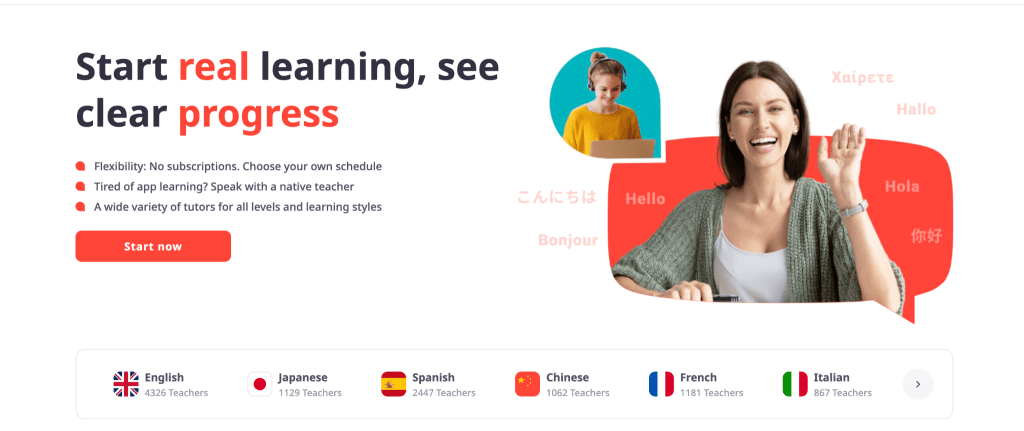
italki is a global language learning platform that connects learners with native-speaking tutors for one-on-one video lessons across more than 130 languages. Founded in 2007 and headquartered in Hong Kong, where we have spent a lot of time, they operate on a flexible pay-per-lesson model that removes the pressure of long-term subscriptions. Beyond live lessons, they offer community features like writing correction, language partner matching, and discussion forums, making it one of the more complete learning environments available for Korean students at any level.
Why italki Stands Out for Online Platforms To Learn Korean:
For learners who struggle to find consistent speaking practice with real Korean speakers, italki’s global tutor network directly solves that access problem. The ability to filter tutors by price, availability, and teaching style means learners aren’t locked into a one-size-fits-all approach, which tends to produce better results for people with specific goals like TOPIK prep or conversational fluency.
Summary of Real User Reviews:
Honestly, the feedback around italki leans heavily positive, especially from learners who found that live human conversation accelerated their progress faster than app-based study alone. The most consistent praise goes to the flexibility of scheduling and the sheer variety of tutors available. Some learners mention that quality varies between instructors, which makes sense because tutors set their own rates and approaches, so spending time on trial lessons upfront is worth it.
Colloquial Audio – Best for Native Speaker Pronunciation Practice
What Does Colloquial Audio Do?
Colloquial Audio is a supplementary resource tied to Routledge’s Colloquial series of language learning books. It offers downloadable MP3 audio files recorded by native speakers, available free online to complement the textbook series. The Colloquial series spans over 70 languages and focuses on teaching languages as they’re actually spoken today, not just written. For Korean learners, that means exposure to natural rhythm, authentic pronunciation patterns, and the kind of spoken cadence that textbook phonetics rarely capture well.
Why Colloquial Audio Stands Out for Online Platforms To Learn Korean:
Bridging the gap between reading Korean and actually sounding natural when speaking it is one of the trickier challenges beginners face, and native-recorded audio directly addresses that. The Colloquial series is designed around real-world language use, which means the audio reflects how Korean speakers actually communicate rather than some formal, textbook-only register.
Summary of Real User Reviews:
Colloquial Audio is most often praised by learners who use it alongside a structured textbook course rather than as a standalone resource. The native speaker recordings get consistent positive mentions for feeling natural and well-paced. That said, because it functions as a companion product rather than a full platform, learners tend to combine it with other tools for vocabulary building and speaking practice.
LingQ – Best for Authentic Content-Based Korean Study
What Does LingQ Do?
LingQ is an online and mobile language learning platform built around studying through authentic content, think podcasts, books, TV transcripts, and real-world material rather than scripted drills. Founded in 2007 and based in West Vancouver, BC, the platform was developed using methods from co-founder Steve Kaufmann, a polyglot who speaks 20 languages. LingQ supports over 50 languages and gives learners tools for unlimited content imports, vocabulary tracking, and offline access, making it a genuinely flexible study environment for self-directed learners.
Why LingQ Stands Out for Online Platforms To Learn Korean:
Korean learners who have moved past beginner lessons but struggle to find quality advanced content often hit a wall with standard apps. LingQ’s import feature lets them pull in any Korean material they actually care about.
Independent researchers at Compare Language Apps ranked LingQ as the most effective language app, and that kind of third-party validation carries real weight for learners trying to make an informed choice.
Summary of Real User Reviews:
Learners who stick with LingQ tend to become devoted users, which says something. The most common thread in reviews is that the vocabulary tracking system genuinely helps with retention over time, especially for Korean where word families behave differently than in Latin-based languages. A few users note that the interface takes some getting used to, but most agree that once it clicks, the platform becomes hard to replace (especially for intermediate and advanced learners who’ve outgrown beginner tools).
LibriVox – Best for Free Multilingual Audiobook Learning
What Does LibriVox Do?
LibriVox is a volunteer-powered organization that records and distributes free public domain audiobooks across 48 languages. Founded in 2005 by Hugh McGuire and based in San Francisco, the project has grown to over 19,584 finished recordings contributed by more than 13,000 members worldwide.
Everything is released into the public domain with no ads, no fees, and no commercial agenda. For language learners, that means a genuinely free library of spoken content with no strings attached, which is rare in a space where most audio resources carry a price tag.
Why LibriVox Stands Out for Online Platforms To Learn Korean:
Accessing diverse listening material without paying for it is a real advantage for learners on a tight budget, and LibriVox’s catalog across 48 languages offers exactly that. The BBC, Wired, and multiple international newspapers have covered the project, which reflects the kind of credibility that comes from consistent community contribution over nearly two decades.
Summary of Real User Reviews:
The reception around LibriVox leans toward appreciation for what it represents as much as what it delivers. Learners value the free access and the variety of reader voices, since hearing Korean spoken by different contributors helps with recognizing natural speech variation.
The volunteer-recorded nature means audio quality isn’t perfectly uniform across recordings, but for learners focused on exposure volume rather than studio polish, that trade-off tends to feel worthwhile.
Polly Lingual – Best for Pronunciation Coaching and Conversation Practice
What Does Polly Lingual Do?
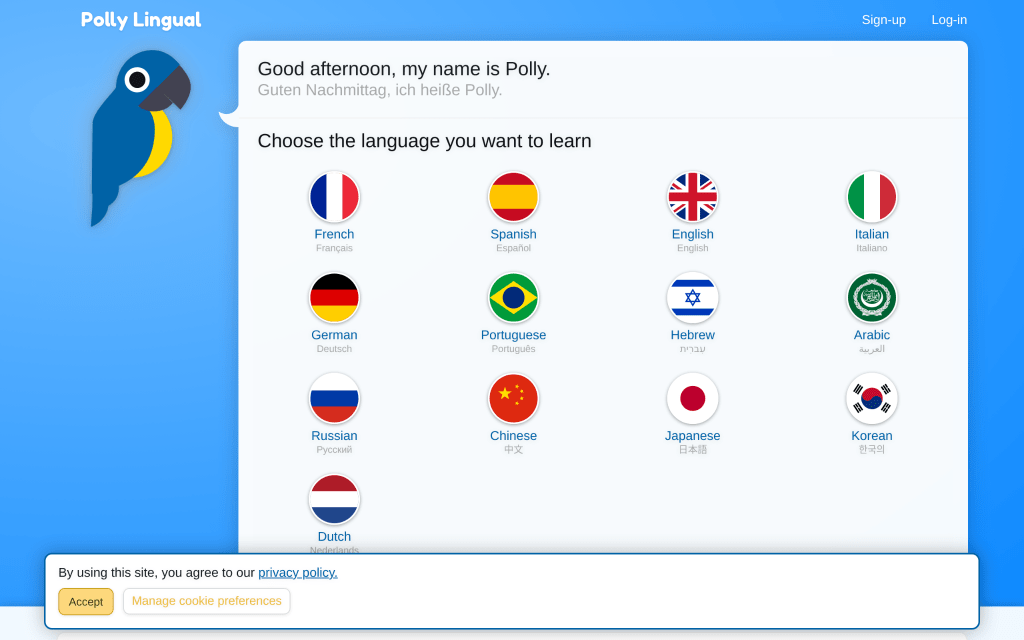
Polly Lingual runs a one-to-one live tutoring platform that pairs algorithmic interactive lessons with instruction from native speaker “language ambassadors.” Founded in 2016 and based in Indianapolis, the platform offers the Polly Passport subscription service, which includes self-paced lessons, pronunciation guidance, conversation practice, local dialect exposure, and grammar resources.
Languages covered include French, Spanish, English, Italian, and German, among others, through both subscription and session-based pricing. The dual structure means learners aren’t choosing between structured study and live practice. They get both.
Why Polly Lingual Stands Out for Online Platforms To Learn Korean:
For learners who find purely app-based study leaves them underprepared for real conversation, Polly Lingual’s combination of algorithm-driven lessons and live native speaker sessions addresses that gap directly. The focus on local dialects and pronunciation coaching is particularly useful for learners who want to sound natural rather than textbook-formal, which is a common goal once conversational fluency develops.
Summary of Real User Reviews:
Polly Lingual’s positioning as a bootstrapped, unfunded platform (not common in a market dominated by VC-backed apps) shows up in reviews as a plus for learners who prefer a more personal, less corporate experience.
Users appreciate the combination of self-paced and live instruction because it supports consistent study habits without requiring a full schedule commitment. Some users note the language selection is still growing, so checking current availability before committing is a smart move.
Research Methodology and Selection Process
Initial Data Collection
The process started by casting a wide net across language learning directories, app review platforms, educator forums, and community threads where Korean learners actively discuss their experiences. Official platform websites were also reviewed for feature documentation, pricing transparency, and any stated teaching methodology. The goal at this stage was quantity, building a broad longlist without filtering prematurely.
Shortlisting Phase
From that initial pool, options were narrowed based on a few clear criteria. Platforms with no verifiable presence in the Korean language learning space were removed early. So were tools where the review pattern suggested a single-use case with limited applicability for different learner goals.
What remained were platforms with documented learner activity, consistent feedback patterns, and some form of credible standing in the community, whether through user volume, media recognition, or community endorsements from educators and linguists.
Verification of Claims
Stated claims on official websites were cross-referenced against what actual users reported on independent review platforms and community forums. When a platform described itself as effective for spoken fluency, the review record was checked for whether learners actually reported fluency gains.
Discrepancies between marketing language and real learner feedback were noted and factored into final positioning decisions.
Authority and Industry Contribution Layer
Platforms were also assessed on broader signals of credibility. These included coverage in recognized publications, mentions from educators in the language learning community, original research produced by or about the platform, and any awards or independent rankings.
LingQ’s independent ranking as the most effective language app and LibriVox’s coverage by BBC and Wired are examples of the kind of signals weighted during this phase.
Online Platforms To Learn Korean-Specific Evidence
Finally, each platform was assessed for its Korean language offering. This meant checking whether dedicated Korean content, tutors, or resources existed, not just whether Korean was listed as a supported language.
Depth of Korean-specific content, learner reviews mentioning Korean study outcomes, TOPIK preparation resources, and the availability of native Korean speakers were all considered. Platforms that treat Korean as a genuine focus rather than a checkbox in a long language list were rated more favorably throughout the selection process.
How to Choose the Right Online Platforms To Learn Korean
Picking a Korean learning platform isn’t just about which one looks polished. It’s about matching the tool to your actual goals, study habits, and timeline. Here’s what to think through before committing.
- Industry/Domain Experience: Look for platforms with a proven history in Korean, specifically, not just general language learning. A long track record in the space usually means better content quality and more experienced tutors.
- Features and Service: Consider whether you need live tutoring, self-paced content, vocabulary tools, or some mix. Different goals (TOPIK prep vs. conversational fluency) call for different feature sets.
- Pricing Structure: Pay-per-lesson models offer flexibility, while subscriptions work better for consistent daily habits. Match the pricing model to how reliably you’ll actually study.
- Results Measurement: Platforms that track vocabulary retention, lesson completion, and speaking progress give you clearer signals of whether your study time is working.
- Industry Knowledge and Compliance: For learners targeting CEFR alignment or TOPIK readiness, check whether the platform’s content and tutors are calibrated to those standards.
Bottom Line
A good Korean learning platform should make consistent practice feel realistic and manageable, especially for speaking and listening skills that are harder to build alone. Platforms like italki stand out because they connect learners directly with native speakers, allowing users to practice real conversations instead of relying only on textbook exercises. For many learners, that kind of live interaction makes the learning process feel more natural, flexible, and easier to maintain long term.