Preschool-Friendly Speech Activities to Support Early Learning
Speech development shapes how preschoolers express themselves, connect with others, and build early learning skills. Simple, playful speech activities give children the tools to practice language in natural, engaging ways.
From games that spark conversation to activities that strengthen articulation, these strategies support growth without feeling like formal lessons.

When families and educators use speech activities in everyday routines, children gain confidence in speaking and listening. Play-based methods like storytelling, art projects, and interactive games make communication practice enjoyable while reinforcing fine motor and literacy skills.
Parents can read about preschool-friendly speech therapy games to find easy ideas that fit into daily life.
These activities not only strengthen communication but also support broader learning, from following instructions to participating in group play. By weaving speech practice into different parts of the day, children build essential skills that prepare them for school and beyond.
This information is for general educational purposes and should not replace professional advice from a licensed speech therapist.
Key Takeaways
- Speech activities help children build strong early communication skills
- Play-based methods make practice engaging and effective
- Everyday routines can integrate speech growth naturally
Core Preschool-Friendly Speech Activities for Early Learning
Children strengthen communication through activities that combine language practice with play. These approaches encourage imagination, build confidence, and support both social interaction and physical development in natural ways.
Interactive Storytelling and Read-Alouds
Storytelling and read-alouds give preschoolers structured opportunities to hear and practice new words. When adults pause to ask questions, children learn to recall details, predict outcomes, and describe characters. This builds vocabulary while also improving listening comprehension.
Using picture books with clear illustrations supports children who rely on visual cues. Teachers and caregivers can point to images, encourage labeling, and model descriptive phrases. These small steps make language more concrete and accessible.
Interactive methods, such as letting children act out parts of the story or fill in repeated phrases, increase engagement. This practice not only strengthens expressive language but also fosters confidence in group settings.
Engaging Games for Communication Skills
Games create low-pressure opportunities for preschoolers to practice speech while having fun. Activities like “Simon Says” develop listening, following directions, and coordination. Turn-taking games such as matching cards or simple board games promote social interaction and patience.
Word-based games, including rhyming challenges or naming categories, help children recognize patterns in language. These tasks support phonological awareness, which is important for early literacy.
Movement-based games also benefit fine motor skills and overall physical development. For example, tossing a ball while naming an object or answering a question combines gross motor activity with verbal practice.
Creative Arts and Dramatic Play
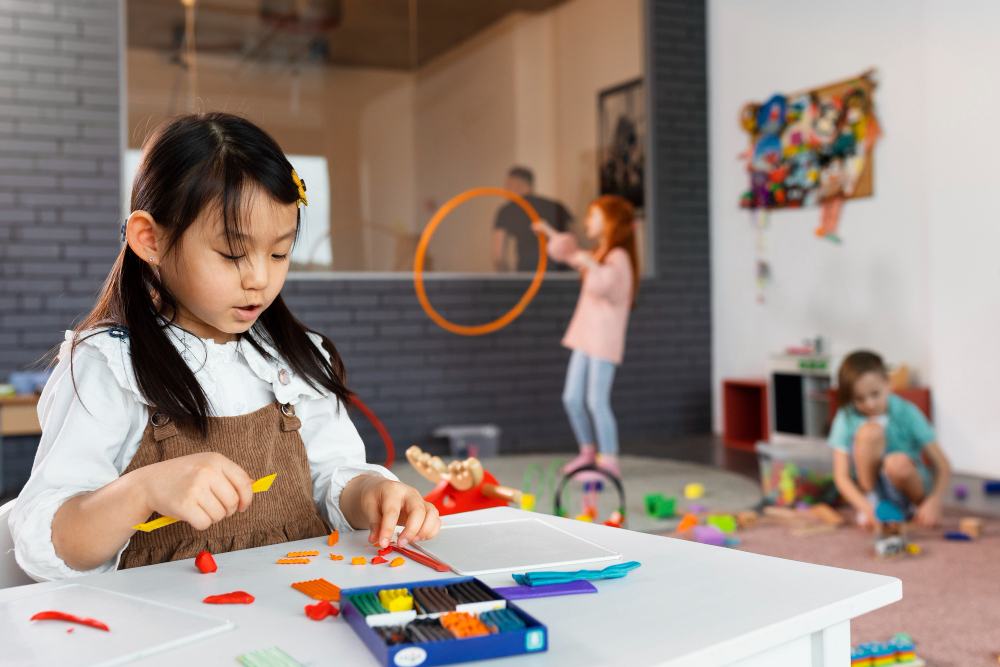
Creative arts allow preschoolers to express ideas through both speech and movement. Drawing and crafting activities give children chances to describe their creations, building connections between actions and words.
This supports vocabulary growth while also improving fine motor coordination.
Dramatic play provides a natural setting for practicing social communication. Pretend scenarios such as playing restaurant, doctor, or shopkeeper encourage children to use role-specific language.
These activities build imagination while reinforcing conversational turn-taking.
Props like costumes, puppets, or toy sets increase engagement and give children prompts for dialogue. By combining creativity with structured language use, dramatic play strengthens confidence and fosters cooperation with peers.
Integrating Speech Activities Across Early Learning Domains
Children strengthen communication when speech activities connect with daily learning tasks. Embedding language practice into math, literacy, nature, and hands-on routines supports both academic and social growth.
Speech-Driven Math and Literacy Activities
Math and literacy lessons can double as speech-building opportunities. When children practice number matching or identify shapes and sizes, they also describe what they see and explain their reasoning. This encourages the use of complete sentences and precise vocabulary.
Teachers can pair pattern recognition with verbal labeling. For example, a child might say, “red, blue, red, blue” while arranging blocks. Such repetition supports both sequencing skills and articulation. In literacy activities, children benefit from reading simple stories aloud, retelling events, and labeling pictures. A short table can help organize combined goals:
Exploring Nature and Everyday Experiences
Outdoor play and exploration provide natural contexts for speech development. A nature walk encourages children to identify colors, textures, and sizes of leaves, rocks, or flowers.
They practice descriptive language while building observation skills. Teachers may guide children to compare objects: “This rock is smooth. That one is rough.” Comparing items supports both adjectives and critical thinking.
Everyday experiences, such as building with blocks, also promote speech. Children describe their structures, explain building choices, and negotiate with peers.
This fosters teamwork and social skills while reinforcing positional words like “on top,” “under,” and “next to.” By turning routine play and exploration into structured conversation, children practice meaningful communication in real-world contexts.
Conclusion
Preschool speech activities help children practice communication in a playful and structured way. By combining games, art, and everyday routines, they can strengthen both expressive and receptive language skills.
When used consistently, speech-focused play builds confidence and prepares children for classroom learning. Families and educators can adapt activities to fit individual needs, creating opportunities for steady progress.
Making English Fun!

I have been a teacher of English for over 15 years, in that time i made hundreds and thousands of resources and learnt so much i think its worth sharing. Hopefully to help teachers and parents around the world.