FREE Printable Kindergarten Sight Word Worksheet – “No”
The sight word “no” is crucial for Kindergarten students, signifying a term used to express refusal, denial, or disagreement.
This guide, designed for educators, ESL instructors, and parents, provides a printable worksheet to help children master “no,” thereby enriching their ability to understand and communicate boundaries, refusal, and negation.

You can see the full grade 1 Dolch Sight Word worksheets sets on the links below.
Importance of Sight Words
“No” plays a significant role in developing reading fluency and comprehension, offering students a word that’s key for articulating negation or disagreement.
Mastery of “no” at the Kindergarten is vital for fostering clear communication, understanding consent, and enhancing narrative storytelling with conflict or differing perspectives.
Overview of “No”
| Aspect | Details |
|---|---|
| Sight Word | “no” |
| Meaning | Used to express refusal, denial, or disagreement; not any. |
| Example | “No, I do not want to go outside.” / “There are no apples left in the basket.” |
| Type of Word | Adverb; Determiner |
This table offers a concise overview of the sight word “no,” emphasizing its significance in enabling Kindergarten students to articulate and comprehend discussions involving refusal, negation, and the concept of absence.
Free Sight Word ‘No’ Worksheet
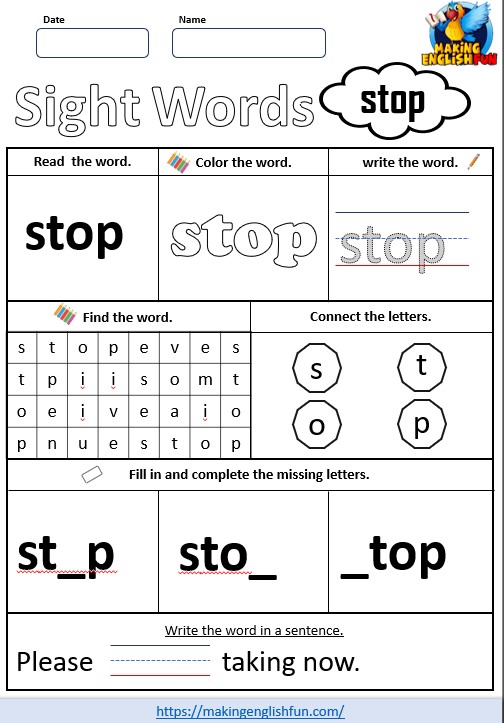
This worksheet dedicated to “no” features targeted exercises designed to deepen students’ understanding of this fundamental word.
Such resources ensure that learners can effectively engage with texts and conversations that involve expressing denial, setting boundaries, or indicating the absence of something.
You can download the printable sight word worksheet below and there are links to full sets of sight word worksheets above and below.
‘No’ Worksheet Activities
Included in the worksheet are:
- Tracing tasks for hands-on interaction with “no.”
- Recognition exercises to enhance the ability to identify “no” within various contexts.
- Sentence construction drills utilizing “no,” reinforcing its use in expressing negation, refusal, and the lack of presence.
Complementary Educational Tools
To supplement the learning experience with “no”:
- Interactive Digital Tools: Platforms that feature “no” in scenarios exploring decision-making, social interactions, or understanding rules and safety, promoting comprehensive understanding.
- Flashcards: Quick-reference cards showcasing “no” for effective practice and language reinforcement.
- Curated Reading Materials: Books and stories that utilize “no,” encouraging its application in reading and fostering discussions about personal choices, consent, and respectful disagreement.
We have more sight word resources here on the site and you can access these resources below as well.
- 40 FREE Printable Pre – K Dolch Sight Word Worksheets.
- 41 FREE Printable Grade 1 Dolch Sight Word Worksheets
- 41 FREE printable grade 3 Dolch Sight Word Worksheets
- 25 Sight Word Games
- Is There An Order To Teach Sight Words?
- Sight Word Spelling Worksheets
- How to teach Sight Words And What Are They?
- Sight Words Worksheets: set 1-20
- Sight Words Worksheets: set 21-40
- 25 Free Kindergarten Sight Word Worksheets.
- FREE Printable Dolch Sight Words Worksheets: Pre – K to Grade 3
- FREE Printable Pre-K Dolch Sight Word List:
- FREE Printable Grade 1 Dolch Sight Word List
- FREE Printable Grade 3 Dolch Sight Word List:
Understanding Kindergarten Sight Words, Dolch Words, and High-Frequency Words
| Term | Definition | Key Characteristics |
|---|---|---|
| Dolch Words | A list of 220 words compiled by Edward William Dolch, Ph.D., considered essential for reading fluency. | – Specifically chosen to enhance reading proficiency. – Includes pronouns, adjectives, adverbs, prepositions, conjunctions, and verbs. – Does not categorize by grade level but is often introduced according to grade. |
| Sight Words | Words that are recognized instantly by sight without needing phonetic decoding. | – Can include Dolch words and beyond. – Aimed at enhancing reading speed and comprehension. – Often taught as part of early reading curricula. |
| High-Frequency Words | Words that appear most frequently in written material. | – Includes a mixture of Dolch words and other commonly used words. – Focuses on the practical aspect of reading frequency. – Often tailored to specific age groups or reading levels. |
Conclusion
The “no” worksheet is an invaluable resource in the Kindergarten sight words curriculum, aiding educators, parents, and caregivers in teaching students about the nuances of negation and refusal.
Mastery of “no” not only supports literacy development but also promotes a better understanding of personal boundaries, ethical decision-making, and the importance of expressing consent and disagreement, significantly enriching students’ communicative abilities and social awareness.
Making English Fun!

I have been a teacher of English for over 15 years, in that time i made hundreds and thousands of resources and learnt so much i think its worth sharing. Hopefully to help teachers and parents around the world.