Extreme or Extreem: Which is the Correct Spelling?
English spelling can often be tricky, especially with words that sound similar but are spelled differently.
A common example of this is the confusion between “Extreme” and “Extreem.”
The correct spelling of such words is crucial for effective communication, particularly in contexts where discussing intensity, severity, or the highest degree of something is involved.
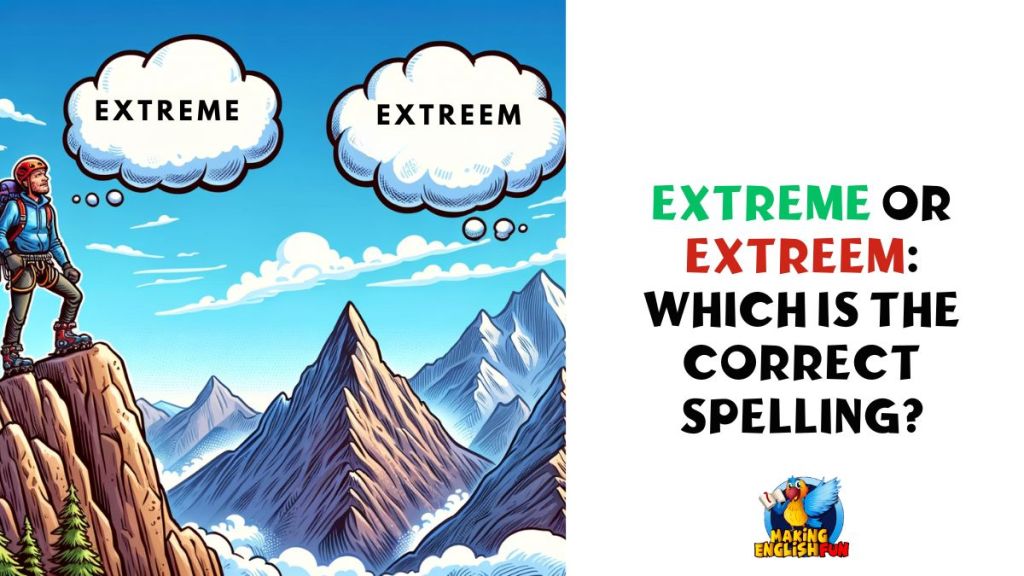
This article aims to clarify the correct spelling of “extreme” and provide guidance to help you remember and use it accurately, whether you’re discussing sports, weather conditions, emotions, or other contexts where extremes are noted.
Correct Spelling and Definition
The correct spelling is “Extreme,” with ‘e’ after the ‘m’.
“Extreme” refers to the highest degree or the most intense or severe part of something.
It is often used to describe conditions, situations, or behaviors that are at the utmost edge of what is typical.
For example, “The extreme weather conditions made the expedition challenging.”
Common Spelling Error: Extreem
The incorrect spelling “Extreem,” with ‘eem’ at the end, is a frequent mistake.
This error might stem from an incorrect phonetic interpretation of the word.
However, the accurate spelling is “Extreme,” which reflects its Latin origin and consistent usage in English.
Comparison with Other Common Spelling Confusions
“Extreme” is one of several English words that are often misspelled. Here’s a comparison table showcasing some common spelling challenges:
| Correct Spelling | Common Incorrect Spelling |
|---|---|
| Extreme | Extreem |
| Definitely | Definately |
| Separate | Seperate |
| Necessary | Neccessary |
| Occurred | Occured |
This table emphasizes the importance of understanding and memorizing the correct spellings of commonly used words.
Etymology and Historical Development
“Extreme” comes from the Latin “extremus,” which is the superlative of “exter,” meaning ‘outer’ or ‘outward.’
This word evolved into “Extreme” in English, retaining the ‘e’ after the ‘m,’ to describe something farthest from the center or a given point.
Usage in Different Contexts
“Extreme” is used in a variety of fields and contexts.
- In sports, it often refers to activities involving a high degree of risk, like extreme sports.
- In discussions about climate, it describes severe weather conditions.
- In emotional contexts, it can refer to intense feelings or states.
Accurate use of “extreme” in these contexts is important for clear and specific communication.
Tips for Remembering the Correct Spelling
To remember the correct spelling of “Extreme,” focus on the root word ‘extremus,’ emphasizing the ‘e’ after the ‘m.’
Regular reading and writing, especially in contexts discussing high degrees of intensity or severity, can reinforce the correct spelling.
Conclusion
Understanding and correctly using the word “Extreme” is essential for precise communication in various professional, academic, and everyday settings.
Accurate spelling not only ensures clarity but also reflects a strong command of the English language.
FAQs and Reader Questions
- How can I improve my spelling of English words like ‘Extreme’?
- Regular reading, writing, and engaging in spelling exercises or quizzes can significantly improve your spelling abilities.
- Are there digital tools that assist with English spelling?
- Yes, various apps and online platforms offer interactive games and exercises designed to improve spelling proficiency.
- Why is correct spelling important in academic and scientific writing?
- In academic and scientific contexts, correct spelling is vital for maintaining the accuracy, clarity, and credibility of the writing.
- Do native English speakers often make spelling errors in words like ‘Extreme’?
- While not as common, spelling errors can occur, often influenced by pronunciation or incorrect assumptions about word formation.
- Can incorrect spelling affect the interpretation of technical documents?
- Yes, misspelling key terms in technical documents can lead to misunderstandings or misinterpretations, affecting the document’s overall clarity and effectiveness.
Further Resources
- https://www.dictionary.com/browse/extreme
- https://thecontentauthority.com/blog/extreem-vs-extreme
- https://blog.engram.us/extream-or-extreme-which-is-correct/