Hyperbole Examples and Worksheets.
Welcome to our exploration of hyperbole, a fascinating figure of speech that’s all about exaggeration.
Hyperbole comes from a Greek word meaning “excess,” and it’s a tool we often use to make our language more expressive and impactful.
Whether it’s in everyday conversation or in the pages of great literature, hyperbole has a unique way of amplifying messages and adding a touch of drama or humor.
In this article, we’ll dive into what hyperbole is, how it’s used, and why it’s such an important part of communication. We also have a couple of hyperbole worksheets you can try out as well for free download.
What is Hyperbole:
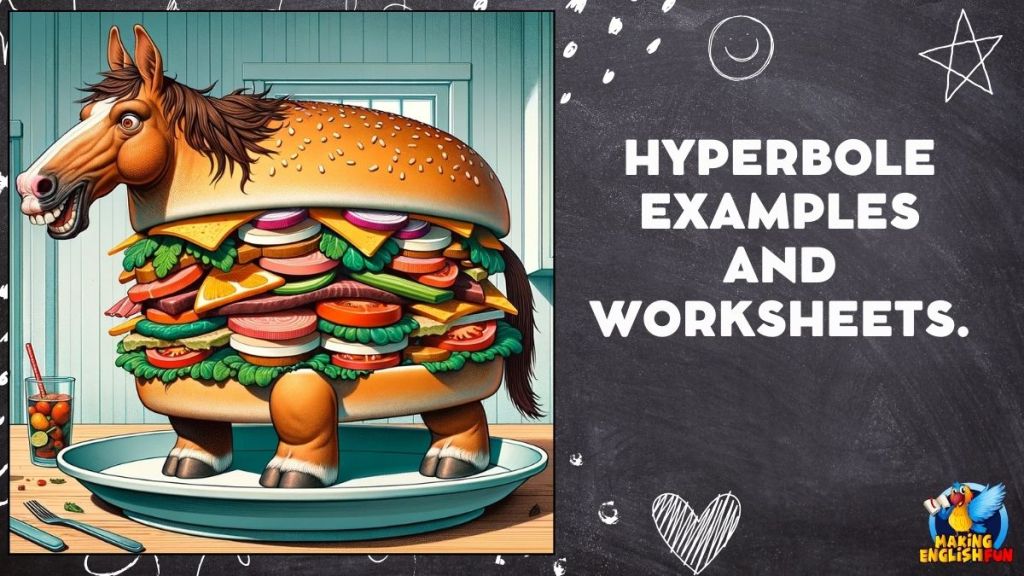
Hyperbole is essentially an exaggeration used for emphasis or effect. It’s not meant to be taken literally; instead, it’s there to add color and depth to our words.
For instance, saying “I’m so hungry I could eat a horse” doesn’t actually mean someone wants to eat a horse; it’s just a way to express significant hunger.
How to Pronounce Hyperbole
The word ‘hyperbole’ is pronounced ‘HI-PUR-BUH-LEE’. with the letter o being pronounced with a schwa sound.
Hi – per – buh – lee
The Role of Hyperbole in Communication
Hyperbole plays a significant role in how we communicate. In our everyday conversations, it’s used to express emotions and reactions in a way that simple facts cannot.
For example, when someone says, “This bag weighs a ton,” it vividly conveys the struggle of carrying a heavy load more than just stating its actual weight.
Hyperbole helps in emphasizing our points, making our expressions more relatable and impactful.
However, it’s important to use hyperbole appropriately – overuse can dilute its effect, and in certain situations, it might be taken too literally, leading to misunderstandings.

Examples of Hyperbole in Everyday Language
Hyperbole is all around us in everyday language, often adding humor or intensity to our expressions.
Let’s look at some common hyperbole examples:
- “I’m dying of laughter.” – Signifies something extremely funny, not actual danger.
- “I’ve told you a million times.” – Used to express frustration over repeated reminders.
- “It’s freezing outside!” – Indicates very cold weather, not literally freezing temperatures.
- “I could sleep for days.” – Suggests significant tiredness or the need for rest.
We have these and other hyperbole examples in the table below and a downloadable version if you need as well.
Table of Hyperbole Examples
| Hyperbolic Expression | Explanation |
|---|---|
| I’m so hungry I could eat a horse. | Exaggerates hunger to imply a very large appetite. |
| This bag weighs a ton. | Overstates the weight to express that the bag is very heavy. |
| I’ve told you a million times. | Used to emphasize frustration over having to repeat something many times. |
| I slept like the dead. | Implies a very deep, undisturbed sleep. |
| She cried a river of tears. | Exaggerates the amount of crying to imply extreme sadness. |
| I’m dying of laughter. | Used to express that something is extremely funny. |
| My mom will kill me if I’m late. | Overstates the consequences to emphasize worry about being late. |
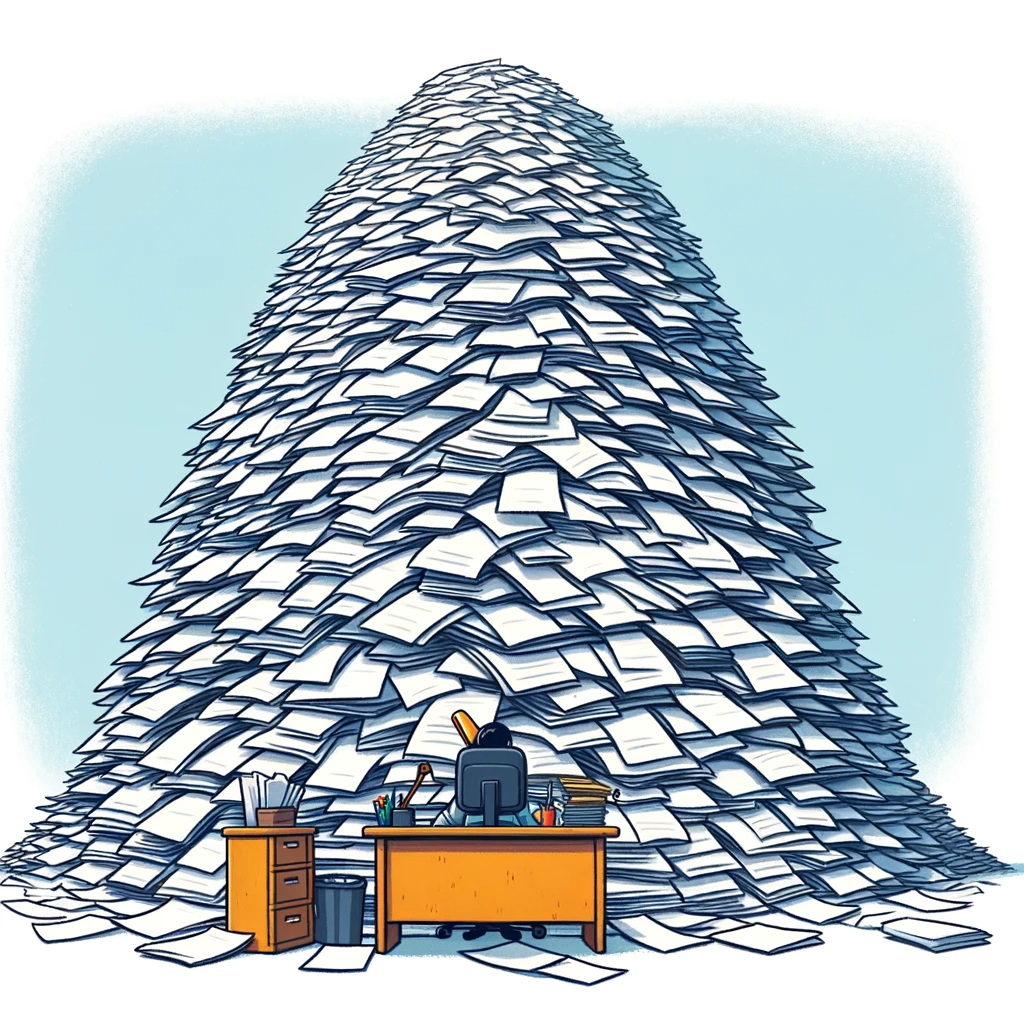
| I have a mountain of paperwork. | Exaggerates the amount of paperwork to imply a very large workload. |
| He’s as old as the hills. | Exaggerates someone’s age to imply they are very old. |
| You could have knocked me over with a feather. | Implies that the speaker was very surprised or shocked. |
| I’m so tired I could sleep for a year. | Overstates the level of tiredness to imply a need for a long rest. |
| This car goes faster than the speed of light. | Exaggerates the car’s speed to imply it’s very fast. |
| He knows everything about everything. | Overstates someone’s knowledge to imply they are very knowledgeable. |
| I’ve been waiting forever. | Used to express impatience or the feeling that something is taking too long. |
| Her smile lit up the room. | Implies that her smile was so bright and pleasant it illuminated the room. |
| That movie was so bad it made my eyes bleed. | Exaggerates the movie’s poor quality to imply it was unbearable to watch. |
| I have a million things to do today. | Overstates the number of tasks to imply a very busy schedule. |
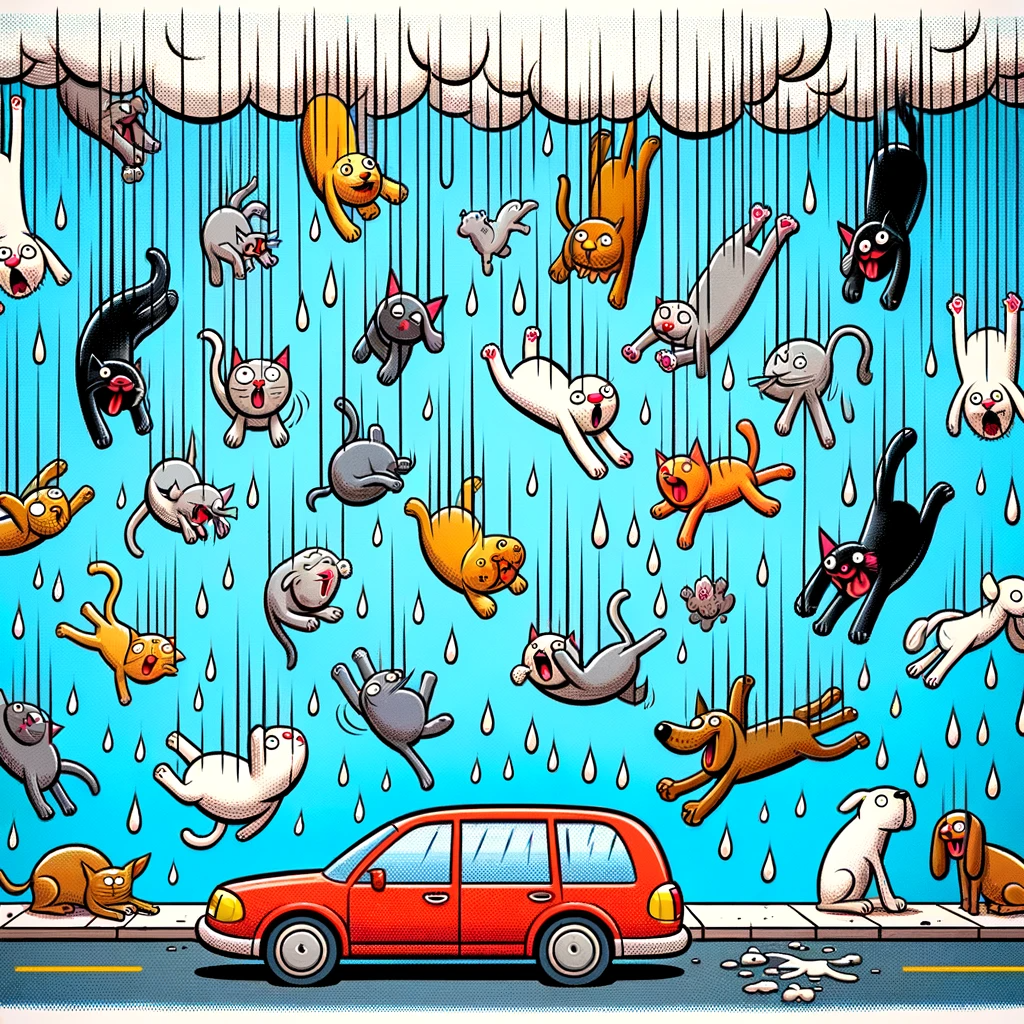
| It’s raining cats and dogs. | Used to describe very heavy rain. |
| I could hear his heart beating a mile away. | Exaggerates the sound of the heartbeat to imply it was very loud or clear. |
| She ran faster than the wind. | Overstates the speed to imply she was running very fast. |

Crafting Hyperbole: Tips and Tricks
Using hyperbole effectively involves more than just exaggeration; it’s about choosing the right moment and the right words to make an impact.
Here are some tips for crafting effective hyperbole:
- Context Matters: Use hyperbole in situations where it’s clear that exaggeration is intended. In serious or formal contexts, it might be misunderstood.
- Match the Emotion: The exaggeration should match the emotion or situation. For example, “I waited an eternity” effectively conveys a long wait, aligning with feelings of impatience or frustration.
- Keep it Creative: The best hyperboles are those that are original and paint a vivid picture. Instead of overused phrases, try coming up with unique exaggerations that capture attention.
Remember, the key to effective hyperbole is balancing the exaggeration with the reality enough to make a point without losing credibility.
Hyperbole in Literature: A Tool for Emphasis and Imagery
In literature, hyperbole serves as a powerful tool to create emphasis and imagery.
Writers often use it to express strong emotions, create a dramatic effect, or add a layer of humor. It helps readers visualize the scenario or feel the emotions described.
For instance:
- Emphasizing Despair: In Edgar Allan Poe’s “The Raven,” the speaker’s hyperbolic descriptions of his sorrow emphasize the depth of his despair. For Example: ‘I heard sounds from heaven; I heard sounds from hell!
- Creating Humor: In Mark Twain’s writings, hyperbole is often used to create humorous situations, exaggerating characters’ traits or circumstances. “could have hung my hat on my eyes, they stuck out so far”
In each case, hyperbole enhances the reader’s experience by making the narrative more engaging and evocative.
Hyperbole Across Genres: From Poetry to Prose
Hyperbole isn’t confined to just one type of writing; it finds its place across various genres, each using it differently to enhance the reader’s experience.
- In poetry, it adds depth and emotion, helping to convey the poet’s feelings and experiences in a more impactful way.
- Prose, including novels and short stories, uses hyperbole to characterize, set scenes, or add humor.
- Even in non-fiction and speeches, hyperbole can underscore a point or emphasize the importance of a topic.
Interactive Exploration: Hyperbole in Popular Media
Hyperbole isn’t just found in literature; it’s also very common in popular media, including movies, television shows, and advertising.
For instance, advertisements often use hyperbole to highlight the effectiveness or uniqueness of a product.
In movies and TV shows, characters might use hyperbole to express emotions dramatically.
By identifying and discussing these examples, viewers can develop a deeper understanding of how hyperbole contributes to storytelling and persuasion in various media formats.

Educational Activities: Teaching Hyperbole
Hyperbole can be a fun and effective topic to introduce in educational settings.
Here are some activities that can help students understand and use hyperbole:
- Hyperbole Hunt: Assign students to find examples of hyperbole in their favorite books, songs, or advertisements. This activity helps them recognize hyperbole in different contexts.
- Create Your Own Hyperbole: Encourage students to write sentences or short paragraphs using hyperbole. This exercise boosts creative writing skills and helps them understand the impact of exaggeration.
- Hyperbole in Storytelling: Have students rewrite a familiar story, incorporating hyperboles to make it more dramatic or humorous. This not only enhances their understanding of the concept but also promotes creativity.
- We also have worksheets linked below to introduce hyperbole to students. you can find the link on the picture below.
These activities engage students in learning about hyperbole in an interactive and enjoyable way, reinforcing their understanding through practice and application.
Hyperbole in Pop Culture and Everyday Expressions
Hyperbole is not just used in books and Tv shows of course; it’s a star player in popular culture and our daily expressions.
You’ll find it in song lyrics that dramatically express emotions, in movie dialogues that exaggerate situations for effect, and even in everyday sayings that have become part of our language.
Think of expressions like “I’m starving!” or “He’s as strong as an ox!”
There are literally hundreds, perhaps thousands, of hyperbolic expressions and we have a challenge for you below to add to these!
FAQs on Hyperbole
What is a hyperbole?
A hyperbole is a figure of speech that involves an exaggeration so dramatic that it cannot be taken literally. It’s used to emphasize a point, evoke strong feelings, or create a strong impression. For instance, “I’m so hungry I could eat a horse” is a classic example of hyperbole.
Why do writers use hyperbole?
Writers use hyperbole to add color and depth to their writing. It can inject humor, offer emphasis, or convey an intense mood or feeling. By exaggerating, writers can make their descriptions more vivid and memorable.
Can hyperboles be misleading?
Hyperboles are not meant to deceive but to emphasize or highlight a point. Readers usually understand that hyperboles are not to be taken literally. However, in non-literary contexts, such as advertising, they can sometimes mislead if the audience takes them at face value.
How can I identify a hyperbole?
You can identify a hyperbole by looking for phrases that are obviously exaggerated and not literally true. They often involve comparisons that are extreme or seemingly impossible.
Are hyperboles appropriate in formal writing?
While hyperboles are more common in creative writing, they can be used effectively in formal writing to make a strong point. However, they should be used sparingly to ensure the writing remains credible and clear.
Do hyperboles differ across cultures?
Yes, hyperboles are a feature of language that can vary widely across cultures. Different cultures may use hyperbole in unique ways, and what is considered an exaggeration in one culture may not be in another.
Can hyperboles be used in everyday conversation?
Absolutely! Hyperboles are often used in daily speech to express feelings and experiences. Phrases like “I’ve died and gone to heaven” when tasting something delicious, or “This bag weighs a ton” when carrying something heavy, are common examples.
How do hyperboles contribute to humor?
Hyperboles contribute to humor by creating exaggerated discrepancies between what is said and what is true. This can lead to amusing and sometimes absurd imagery that is sure to get a laugh.
Can hyperbole be found in visual media?
Yes, hyperbole can be visual as well as verbal. In visual media like cartoons, characters may perform actions that are exaggerated or impossible in real life, which is a form of hyperbole.
How can I practice using hyperboles?
You can practice using hyperboles by engaging with creative writing exercises, using hyperbole worksheets, or by trying to incorporate them into your everyday speech for a bit of fun. Remember, the key is to exaggerate in a way that highlights your point without being taken literally.

Call to Action
Now it’s your turn to step into the world of hyperbole.
Experiment with it in your writing or daily conversations, and see how it changes the impact of your words.
Feel free to share your most creative hyperbolic expressions in the comments below – we’d love to read them!
And remember, whether in writing or speech, let your imagination soar; sometimes, the sky is not the limit, but just the beginning!
Further Resources
- https://www.studiobinder.com/blog/what-is-a-hyperbole-definition-examples/
- https://study.com/academy/lesson/hyperbole-in-literature-definition-examples-quiz.html
- https://parade.com/1175397/marynliles/hyperbole-examples/
Making English Fun!

I have been a teacher of English for over 15 years, in that time i made hundreds and thousands of resources and learnt so much i think its worth sharing. Hopefully to help teachers and parents around the world.