Consonant L-E Word Lists and Syllables
L-E (Consonant-l-e) syllables hold a special place, especially in the context of word endings.
L-E syllables are unique in that they typically appear at the end of words and involve a consonant followed by the letters ‘le’. The vowel sound in these syllables is generally silent, leaving the ‘l’ sound to be blended with the preceding consonant.
These syllables, characterized by a consonant followed by an ‘le’, play a significant role in how words are pronounced and spelled.

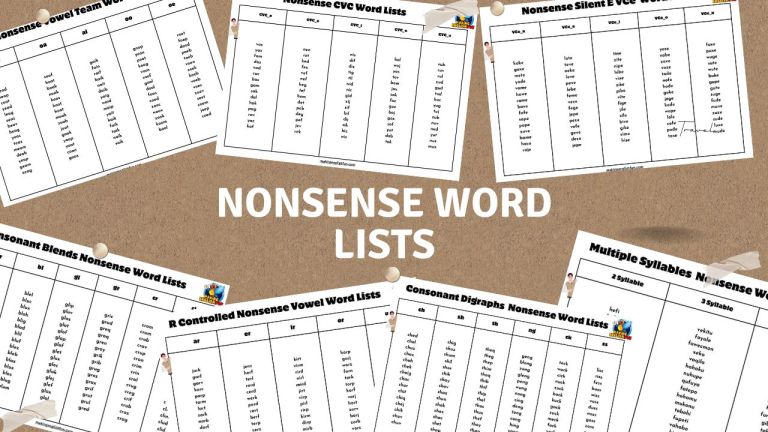
You can download this Consonant l-E word list further down the article, look for the image!
What are L-E Syllables
Typically found at the end of words, these syllables consist of a consonant followed by the letters ‘le’.
The vowel preceding the consonant-l-e pattern is usually short, and the ‘e’ is silent, making the ‘l’ sound prominent.
This structure gives a unique rhythm and flow to words, often creating a soft ending.
For instance, in ‘candle’, the ‘dle’ forms an L-E syllable, where the ‘a’ is short, the ‘d’ blends with the ‘l’, and the ‘e’ remains silent.
Understanding these nuances is vital for students to accurately decode and spell words with L-E syllables.
We have recently started to show some love to the YouTube Channel, if you want to say thanks then a quick vie and like on there is awesome!
Common Patterns and Examples in L-E Syllables
L-E syllables are common in many English words, and recognizing their patterns is important for early literacy development.
Some common examples include:
- ble: as in ‘table’, ‘bubble’, ‘stable’
- dle: as in ‘candle’, ‘middle’, ‘handle’
- fle: as in ‘waffle’, ‘ruffle’, ‘sniffle’
- gle: as in ‘eagle’, ‘struggle’, ‘juggle’
- kle: as in ‘twinkle’, ‘ankle’, ‘sparkle’
- ple: as in ‘simple’, ‘ripple’, ‘people’
- tle: as in ‘little’, ‘battle’, ‘kettle’
- zle: as in ‘puzzle’, ‘drizzle’, ‘sizzle’
Detailed Exploration of Each L-E Syllable Type
BLE Syllables
- Explanation: In BLE syllables, the ‘b’ blends with the ‘le’ to create a soft ending, as in ‘table’. These syllables often give a gentle, rhythmic ending to words.
BLE Examples Table:
| nibble | table |
| fable | bubble |
| able | stable |
| gamble | double |
| jumble | rumble |
| scrabble | hobble |
| dribble | trouble |
| assemble | pebble |
DLE Syllables
- Explanation: DLE syllables end with a ‘dle’ sound, creating a distinctive ending as in ‘candle’. This syllable type is common in many English words.
DLE Examples Table:
| paddle | candle |
| middle | handle |
| cradle | saddle |
| riddle | muddle |
| fiddle | doodle |
| cuddle | spindle |
| huddle | kindle |
| dawdle | bridle |
FLE Syllables
- Explanation: FLE syllables, as found in ‘waffle’, bring a soft and flowing sound to the ends of words. They are especially common in descriptive words.
FLE Examples Table:
| waffle | ruffle |
| shuffle | sniffle |
| muffle | scuffle |
| baffle | truffle |
| rifle | stifle |
| raffle | kerfuffle |
| trifle | snuffle |
| gruffle |
GLE Syllables
- Explanation: GLE syllables often appear in words like ‘eagle’, giving a soft and sometimes playful sound to the word endings.
GLE Examples Table:
| juggle | eagle |
| wiggle | struggle |
| giggle | boggle |
| toggle | finagle |
| smuggle | beagle |
| wriggle | bedraggle |
| straggle | haggle |
| snuggle | gargle |
KLE Syllables
- Explanation: KLE syllables end with a ‘kle’, producing a distinctive sound as in ‘twinkle’. These syllables often give a light, tinkling sound to word endings.
KLE Examples Table:
| twinkle | ankle |
| sprinkle | buckle |
| wrinkle | pickle |
| tackle | freckle |
| sparkle | knuckle |
| tickle | spectacle |
| chuckle | knuckle |
| fickle | cockle |
PLE Syllables
- Explanation: PLE syllables, as in ‘simple’, often produce a soft and pleasant ending in words.
PLE Examples Table:
| simple | ripple |
| apple | people |
| couple | sample |
| staple | dimple |
| purple | topple |
| triple | grapple |
| nipple | dapple |
| maple | tipple |
TLE Syllables
- Explanation: TLE syllables, like in ‘little’, add a unique, often diminutive quality to the words they end. These syllables are quite common in English and can be found in a variety of words.
TLE Examples Table:
| little | battle |
| kettle | title |
| settle | bottle |
| rattle | nettle |
| brittle | mantle |
| turtle | fettle |
| tattle | shuttle |
| jostle | whistle |
ZLE Syllables
- Explanation: ZLE syllables bring a buzzing or soft hissing sound to the ends of words, as in ‘puzzle’. This syllable type is less common but adds a distinctive sound to the words it appears in.
ZLE Examples Table:
| puzzle | drizzle |
| sizzle | muzzle |
| dazzle | nozzle |
| frazzle | guzzle |
| nuzzle | bedazzle |
| grizzle | embezzle |
| swizzle | wuzzle |
| whizzle | razzle |
Pronunciation Rules for Consonant-l-e (L-E) Syllables
Understanding the pronunciation rules for Consonant-l-e (L-E) syllables is crucial in helping students read and spell these words accurately.
It should be remembered this is English and like in all aspect s of our language, Consonant l-e also has excepts to these rules!
Here are the key rules:
- Silent ‘e’: In L-E syllables, the ‘e’ at the end is always silent. The presence of this silent ‘e’ influences the pronunciation of the syllable but does not produce a sound itself.
- The Preceding Vowel: Typically, the vowel that comes before the consonant-l-e pattern is short. For example, in ‘candle’, the ‘a’ is short. However, there are exceptions, such as in ‘purple’, where the ‘u’ has an ‘ur’ sound.
- Blending the Consonant with ‘L’: The consonant immediately before the ‘le’ blends with the ‘l’ to create a distinct sound. For instance, in ‘table’, the ‘b’ blends with the ‘l’ to produce a ‘bl’ sound.
- Stress Placement: In multi-syllable words with an L-E ending, the stress often falls on the syllable before the L-E. For example, in the word ‘handle’, the stress is on the first syllable ‘han’, and the ‘dle’ is pronounced more softly.
- Division of Syllables: When dividing words into syllables, the consonant-l-e usually forms the final syllable. This rule helps in breaking down words for spelling and pronunciation, as seen in ‘bub-ble’ or ‘waf-fle’.
- Exceptions to the Rule: While most L-E syllables follow these patterns, there are exceptions. It’s important to highlight these irregularities, like in ‘castle’, where the ‘t’ is silent, or ‘vehicle’, where the preceding vowel sound is long.
Teaching Strategies for L-E Syllables
When teaching L-E (Consonant-l-e) syllables, it’s important to use strategies that highlight their unique structure and pronunciation.
Here are some effective methods:
- Visual and Auditory Emphasis: Use visual aids to show the L-E syllable pattern and auditory exercises to emphasize the unique sound of the ‘le’ ending. Highlight the silent nature of the preceding vowel and the prominence of the ‘l’ sound.
- Word Building and Segmentation: Engage students in building words with L-E endings from smaller segments. For example, start with ‘bub’ and add ‘ble’ to form ‘bubble’. This helps students understand how the syllable structure impacts word formation.
- Identifying L-E Syllables in Texts: Encourage students to find and highlight L-E syllables in their reading materials. This helps them recognize these syllables in context and understand their frequency in everyday language.
- Spelling Practice: Incorporate L-E syllable words into spelling exercises. Dictation can be particularly effective, as it challenges students to remember the specific spelling pattern of L-E syllables.
- Interactive Activities: Create engaging activities such as word puzzles, matching games, or board games focused on words with L-E syllables. These activities can make learning more enjoyable and memorable.
You can download our FREE 160 word Consonant – LE word list form the link below. the image here.
Classroom Activities and Exercises
To reinforce the concept of L-E syllables, consider integrating the following activities into your teaching:
- Syllable Sorting: Have students sort a mix of words into categories based on their ending syllables, including L-E syllables.
- Create Your Own Word: Encourage students to create new, imaginative words using the L-E syllable structure. This fosters creativity while reinforcing the syllable concept.
- Story Writing: Ask students to write short stories or sentences using a set number of L-E syllable words. This promotes the practical application of their knowledge.
- Group Reading and Discussion: During group reading sessions, identify and discuss L-E syllable words as they appear in the text. Analyze how they contribute to the rhythm and meaning of the sentences.
More Consonant L-E Word Resources
- Consonant Blends Sentence Generator
- Consonant Blend Worksheets
- Should You Teach Vowels Or Consonants First?
- Free Consonant Blends FInish the word Worksheets
- English Sentence Generators
Conclusion
Consonant L-E syllables are an essential component of English phonics, particularly influential in word endings.
Understanding and effectively teaching these Consonant l-e words and syllables can significantly help students’ reading and spelling skills.
By incorporating a mix of instructional strategies and engaging activities, educators can guide students to a comprehensive understanding of L-E syllables.
Further Reading
- https://literacylearn.com/141-consonantle-words/
- https://www.geneva304.org/Downloads/Spelling%20List%2017.pdf
- https://learningattheprimarypond.com/blog/what-are-consonant-l-e-words-what-are-some-ideas-for-teaching-consonant-l-e-words/
- https://www.teachstarter.com/us/teaching-resource/word-study-list-final-stable-syllable/
Making English Fun!

I have been a teacher of English for over 15 years, in that time i made hundreds and thousands of resources and learnt so much i think its worth sharing. Hopefully to help teachers and parents around the world.