What is Universal Design for Learning (UDL)
Universal Design for Learning (UDL) is an innovative educational framework that aims to optimize teaching and learning for all people, based on a deep understanding of how individuals learn.
Originating from the field of architecture and design, UDL in education focuses on creating accessible and inclusive learning experiences for a diverse range of students.
This approach recognizes the variability of learners and strives to accommodate their unique learning styles and needs.

Understanding Universal Design for Learning
Universal Design for Learning is a set of principles for curriculum development that give all individuals equal opportunities to learn.
- Core Concept: UDL is based on the insight that there is no one-size-fits-all approach to learning. It advocates for flexible learning environments that can accommodate individual learning differences.
- Objectives: The primary goals of UDL are to remove barriers to learning, provide multiple means of engagement, representation, and expression, and thus improve the learning experiences of all students.
UDL represents a shift in educational methodology, emphasizing the need for a more adaptable and inclusive approach to teaching and learning.
Table: Key Aspects of Universal Design for Learning (UDL)
| Aspect | Details about Universal Design for Learning |
|---|---|
| Definition | A framework for designing educational environments that enable all learners to gain knowledge, skills, and enthusiasm for learning. |
| Core Principles | 1. Multiple Means of Engagement: Addressing the ‘why’ of learning. 2. Multiple Means of Representation: Addressing the ‘what’ of learning. 3. Multiple Means of Action and Expression: Addressing the ‘how’ of learning. |
| Benefits | Enhances learning experiences for all students, promotes flexible teaching, and supports personalized learning. It also helps in meeting diverse educational needs. |
| Challenges | Includes resource constraints, the need for teacher training, and adaptation to traditional teaching methods. |
| Implementation Strategies | Involves curriculum design that incorporates UDL principles, leveraging technology, providing professional development for educators, and fostering a collaborative teaching environment. |
| Application in Educational Contexts | Adaptable across different educational levels and settings, from elementary education to higher education, and beneficial in special education. |
Theoretical Foundations of UDL
The development of UDL is grounded in a variety of educational theories and research:
- Neuroscientific Basis: UDL is rooted in research from neuroscience, which shows that individual learners vary significantly in how they perceive and comprehend information.
- Legislation and Policies: Various educational policies and legislation, such as the Individuals with Disabilities Education Act (IDEA), have influenced the adoption of UDL, emphasizing the need for accessibility in education.
These foundations underscore UDL’s commitment to creating learning experiences that cater to the diverse needs and abilities of all students.
Key Principles of Universal Design for Learning
Universal Design for Learning is built around three core principles that address the primary aspects of learning:
- Multiple Means of Engagement: This principle focuses on the ‘why’ of learning. It involves providing diverse ways to engage and motivate students, taking into account their interests, motivations, and learning preferences.
- Multiple Means of Representation: Addressing the ‘what’ of learning, this principle emphasizes offering information in various formats. It aims to cater to different sensory preferences and ways of processing information.
- Multiple Means of Action and Expression: This principle covers the ‘how’ of learning, providing students with different ways to demonstrate their knowledge and skills. It recognizes that students vary in how they can express what they know.
Together, these principles ensure that all students have an equal opportunity to learn and participate in educational activities.
Benefits of Universal Design for Learning
The UDL framework offers several key benefits:
- Fosters Inclusive Education: UDL makes learning accessible and appropriate for students with a wide range of abilities, including those with disabilities.
- Enhances Learning for All Students: By considering diverse learning styles and needs, UDL benefits not just students with learning differences but all students.
- Encourages Flexible Teaching: UDL prompts educators to think creatively about how to teach and assess, leading to more innovative educational practices.
- Prepares Students for a Diverse World: By experiencing diverse ways of learning and expressing knowledge, students are better prepared for the variety and complexity of the real world.
UDL’s focus on inclusivity and flexibility makes it a powerful approach in modern education, aligning with the goals of equity and excellence in learning.
Implementing Universal Design for Learning
Implementing UDL requires strategic planning and a shift in educational mindset:
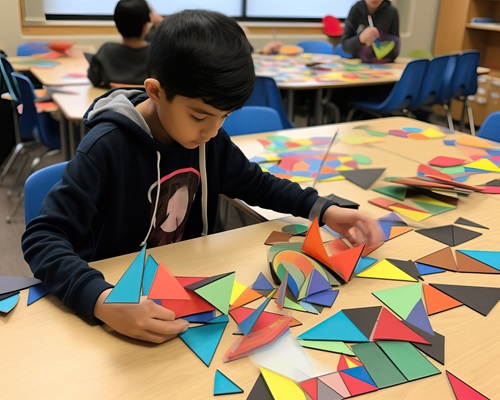
- Curriculum Design: Design curricula that incorporate UDL principles from the outset. This includes planning lessons with multiple methods of engagement, representation, and expression.
- Use of Technology: Leverage technology to provide diverse learning materials and platforms for expression. This can range from digital textbooks to interactive learning tools.
- Professional Development: Educators need training to understand and effectively implement UDL principles. This involves learning how to create inclusive lesson plans and assessments.
- Collaboration: Foster collaboration among educators, special education specialists, and technology experts to develop and implement UDL-based strategies effectively.
Implementing UDL is an ongoing process that involves continual reflection and adaptation to meet the evolving needs of all students.
Challenges and Solutions
While UDL offers many benefits, its implementation can encounter challenges:
- Resource Limitations: Schools may face constraints in terms of resources needed to implement UDL, such as technology and training.
- Solution: Seek community partnerships, grants, and other funding opportunities. Utilize free and open-source educational resources.
- Resistance to Change: Some educators may be resistant to adopting new teaching methods.
- Solution: Provide clear evidence of UDL’s effectiveness and offer robust support and training to educators. Highlight the long-term benefits to student learning.
- Ensuring Consistency: Consistently applying UDL across different classes and subjects can be challenging.
- Solution: Develop school-wide or district-wide strategies for UDL implementation. Encourage collaboration and sharing of best practices among teachers.
Addressing these challenges is essential for the effective and widespread adoption of UDL in educational settings.
Universal Design for Learning in Different Educational Contexts
UDL’s flexibility makes it suitable for a wide range of educational contexts:
- Early Childhood and Elementary Education: Use UDL to introduce varied teaching methods and materials that cater to young learners’ diverse needs and learning styles.
- Secondary Education: Apply UDL in designing lessons that cater to adolescents’ varied interests and learning preferences, including the integration of technology.
- Higher Education: Implement UDL in course design and delivery to accommodate diverse learners, including non-traditional and adult students.
- Special Education: UDL is particularly beneficial in special education settings, where it can provide multiple avenues for learning and expression for students with various disabilities.
In each educational setting, UDL can be tailored to meet the specific needs of the student population, ensuring that all learners have equal access to education.
Conclusion
Universal Design for Learning offers a framework that is adaptable, inclusive and student-centered. It redefines the educational landscape by acknowledging and embracing the diverse ways in which individuals learn.
Through its implementation, UDL not only supports students with specific learning needs but enhances the learning experience for all students.
UDL’s emphasis on providing multiple means of engagement, representation, and action & expression ensures that every student has an opportunity to access the curriculum, engage meaningfully with content, and demonstrate their understanding in ways that best suit their abilities and preferences.
Further Reading
- https://www.readingrockets.org/topics/assistive-technology/articles/universal-design-learning-udl-what-you-need-know
- https://teaching.cornell.edu/teaching-resources/designing-your-course/universal-design-learning
- https://www.cast.org/impact/universal-design-for-learning-udl
- https://www.understood.org/en/articles/universal-design-for-learning-what-it-is-and-how-it-works
Making English Fun!

I have been a teacher of English for over 15 years, in that time i made hundreds and thousands of resources and learnt so much i think its worth sharing. Hopefully to help teachers and parents around the world.