Museum of Forgotten Feelings: Exhibit Emotions that Don’t Exist Anymore
Not all emotions endure. Some dissipate into dust, too fragile or too odd for our contemporary brains to retain. What became of the excitement you experienced when a letter took weeks to reach you, or the embarrassment of speaking too loudly in candlelight? What if you could restore them—not as recollections, but as complete museum experiences?
Welcome to the Museum of Forgotten Feelings, where we don’t merely recall lost emotions—we walk through them. Every room is an immersive installation, constructed around feelings that have vanished: “flinchjoy” from surprise kindness, “latchfear” from clamping secrets too tightly, or “hushpride,” the quiet radiance of doing something right in complete silence.
Let’s create these emotional capsules together with Dreamina’s AI image generator, and make invisible feelings unforgettable images.
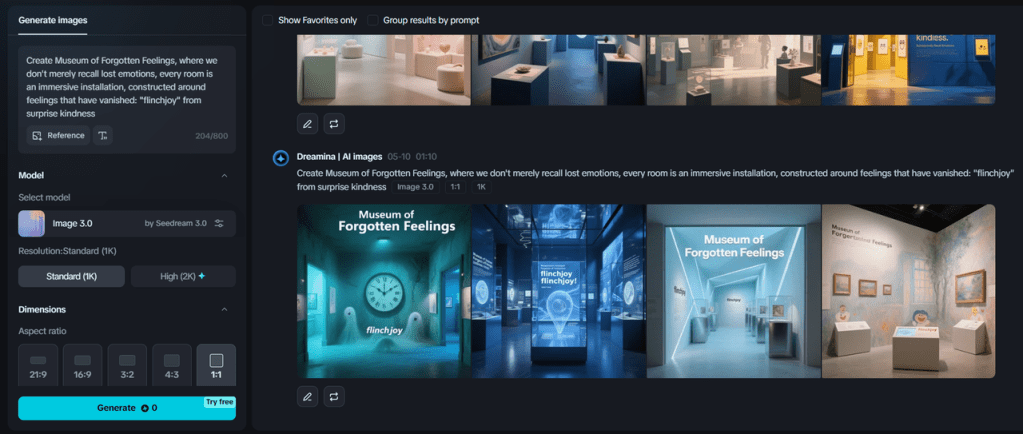
Exhibit 1: flinchjoy—an emotion of startled delight
This space radiates in golden ambers and flashes of surprise. Guests are welcomed by random acts of loveliness—mechanical birds showering flower petals, chairs that sing lullabies when you sit. Flinchjoy was the startle before a smile, the happy panic of discovering you were safe after all.
- The ground provides soft surprises: Step in the correct place and lights flower beneath your feet, as emotion flares before your mind can catch up.
- Mirrors reflecting past comforts: Visitors view themselves through the eyes of their most tender moments—childhood giggles, surprise hugs, or getting picked up from school too early.
- Scent-spheres floating in the air: Invisible bubbles releasing the aroma of warm cinnamon, summer rain, or that much-loved but forgotten bookstore your mind had remembered loving.

Through an image generator, you can design this room into a space-for-remembering. Envision a soft fog carrying sound like air, walls flushing when you touch them, staircases curled in the shape of surprise by something kind. These are emotions you don’t simply show—you construct them.
Exhibit 2: latchfear—the fear of keeping what counts too well
This feeling was present in individuals who locked their hearts too tightly. It resided in unsent letters, passwords that no one could figure out, and bedrooms with bolted drawers. The Latchfear room is dark, complex, and filled with puzzles of safe-cracking.
- Walls covered in sealed compartments: Some open with pressure, others with warmth, and some remain locked forever.
- Hidden sound loops: Behind artwork and vents, snippets of sound are heard—children’s voices, singing mothers, or cut-off songs.

- Staircase of do-overs: Twisting in a circle, this building goes up but never comes down. Every floor shows messages individuals intended to give but never did.
Here, Dreamina’s tools excel. You can craft intricate vault-inspired imagery, conceal secret messages in textures, or sculpt objects that seem to be protecting something valuable. With a single click, lost paranoia is architecture.
Exhibit 3: hushpride—glory that never asks for applause
Not all emotions are boisterous. Some are silent pride. Hushpride flowered in individuals who repaired broken things without being asked, who listened more than they talked, or who tended gardens for strangers. This exhibit is nearly vacant—and that’s the idea.
- Spotlights on nothing: Lights individually shine on chairs, doorknobs, or a mended glove. Each was owned by someone who changed the world quietly.
- A whisper dome: Stand in the middle and listen to distant thank-yous in dozens of languages—some real, some made up.
- Automatically closing curtains: When the visitors depart, the walls quietly fold towards each other, enveloping what they witnessed, as if the feeling itself doesn’t want to be noticed.
This type of visual restraint is compelling. With Dreamina’s AI logo generator, you can design hushed symbols—a wilted flower, a creased coin, an unobtrusive crown—to mark this emotion’s tale. The logo is understated, nearly invisible until it reflects light.

Exhibit 4: imagination to reality—sticker it for realism
Every picture you make is an emotional artifact—a room that is nowhere and everywhere. And when you’ve made enough, think of building your own digital museum. Use Dreamina’s sticker maker to title each emotion room with icons or tags to match the mood. Perhaps your sticker for “hushpride” is a silent dove. Perhaps “latchfear” receives a rusty key. Stickers make invisible ideas into symbols that communicate.

How to build your own museum of overlooked feelings
Perhaps your overlooked feeling isn’t listed here. Perhaps it’s wintersoul, the glow of being cold with someone. Or pregrief, the sorrow of losing something before it starts. Whatever you can envision, Dreamina assists you in creating the whole universe around it. Here’s where to begin:
Step 1: Write a text prompt
First, go to the “Image generator” within Dreamina. This is your gateway to emotional worldbuilding. In the text input, type a rich and creative prompt. Consider what the emotion looks like in shape, texture, space, and sound. A good one:
“A surreal museum corridor lined with misty mirrors, luminescent floor tiles, and suspended scent orbs. The mood is melancholic and wistful, with pale pastel light and chiseled shadows.“
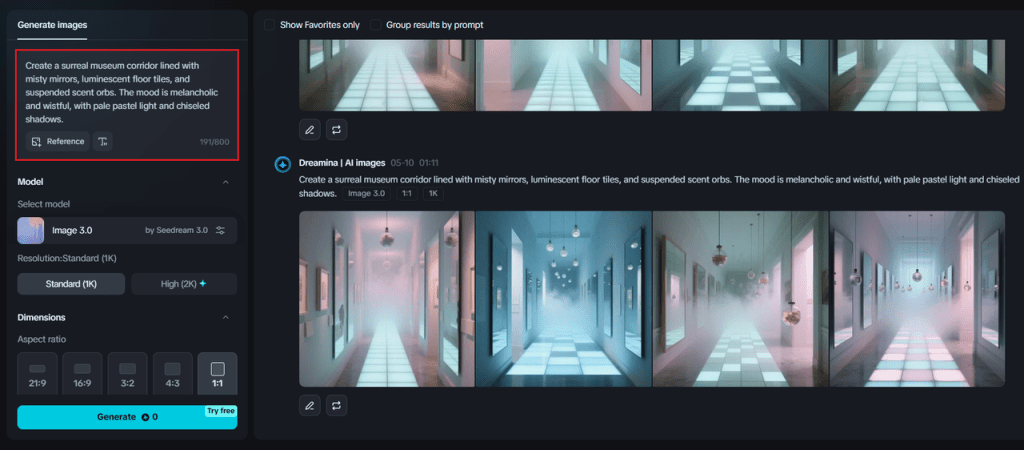
Step 2: Adjust parameters and generate
After your prompt is prepared, modify the generation settings to define your image more specifically. Select the model you like, then define the aspect ratio (square, portrait, or landscape) based on your layout requirements. Select a size that fits your design canvas, and choose between 1K or 2K resolution based on how detailed you need your outcome.
Finally, click on “Generate.” Dreamina will bring your lost emotion into a physical space.

Step 3: Customize and download
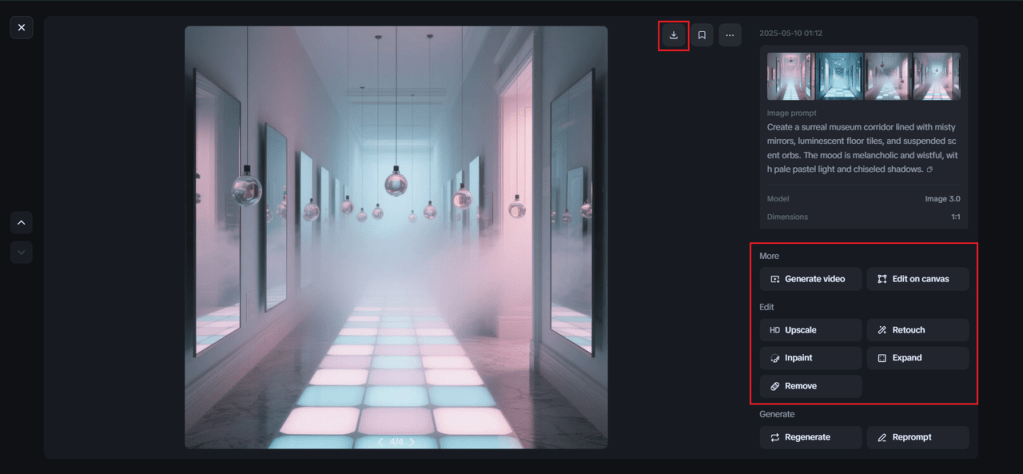
Now finish your museum room with Dreamina’s feature-rich editing. Employ inpaint to insert symbolic things or doorways. Employ expand to extend hallways or ceilings. Employ remove to erase distracting things that are not part of your mood.
Employ retouch to fine-tune lighting, glow, or textures. When everything looks perfect, click the “Download” icon and save your completed exhibit.
Conclusion
In a world that speeds by too fast to identify what it feels, constructing a Museum of Forgotten Feelings is a subversive act of recall. With Dreamina, you’re not simply creating art—you’re bringing back emotions that fell through the cracks of history. So go ahead—create the feelings we never taught ourselves to identify. And make them their own room.
Making English Fun!

I have been a teacher of English for over 15 years, in that time i made hundreds and thousands of resources and learnt so much i think its worth sharing. Hopefully to help teachers and parents around the world.