Fun Language Games for Kids: Learning Through Play
Language acquisition is a fundamental aspect of a child’s development, serving as the bedrock for effective communication, cognitive growth, and social interaction.
However, traditional methods of teaching language skills can sometimes feel monotonous and uninspiring for young learners.
This is where the concept of learning through play becomes invaluable. Integrating fun language games into a child’s educational routine not only makes the process enjoyable but also enhances retention and comprehension.
This article explores a variety of engaging language games designed to make learning both effective and entertaining. From digital platforms to classic word-based games, these activities cater to various learning styles and preferences.
Whether you’re a parent looking to supplement your child’s learning at home or an educator aiming to introduce more interactive elements into your curriculum, these language games provide versatile options for fostering linguistic skills.
Discover digital language games that harness the power of technology, interactive storytelling that sparks creativity, and word-based games that challenge and delight.
Digital Language Games
In today’s technologically driven world, digital language games for grade 1, games for grade 2 and higher have become indispensable tools in fostering a love for languages among children.
These interactive platforms offer a dynamic and engaging way for kids to learn new vocabulary, improve grammar, and develop critical thinking skills, all while having fun.
Here are some popular types of digital language games that can make learning a delightful experience for young minds.
Educational Apps
Educational apps are at the forefront of digital language learning, providing a treasure trove of interactive activities designed to captivate and educate.
Apps like Duolingo Kids, Promova Kids, Endless Alphabet, and Rosetta Stone for Kids are tailored to meet the needs of young learners.
They employ gamified lessons, where each level feels like a new adventure, keeping children motivated and eager to progress.
These apps often incorporate colorful graphics, cheerful animations, and instant feedback, which help reinforce learning and make language acquisition an enjoyable process.

Online Language Puzzles
Online language puzzles are another fantastic way to challenge and engage kids. Websites like PBS Kids and Funbrain offer a variety of puzzles that require children to match words with pictures, complete sentences, and solve riddles.
These puzzles not only enhance vocabulary but also improve problem-solving skills and cognitive abilities. By turning language learning into a game of wits, children are more likely to stay engaged and retain the information they acquire.
Interactive E-Books
Interactive e-books combine the traditional joy of reading with the benefits of digital interactivity. Platforms such as Epic! and Oxford Owl offer a vast library of e-books where kids can click on words to hear them pronounced, follow along with highlighted text, and engage in mini-games embedded within the stories.
These features help children improve their reading fluency, comprehension, and pronunciation in a fun and interactive manner.
The ability to choose from a wide range of genres and topics ensures that there is something to spark every child’s interest.
By incorporating educational apps, online language puzzles, and interactive e-books into their routine, parents and educators can create a dynamic and enjoyable learning environment that fosters a lifelong love for languages.
Interactive Storytelling
Interactive storytelling is a delightful way to foster language skills while engaging a child’s imagination.
By participating in creating and narrating stories, children not only expand their vocabulary but also learn the fundamentals of grammar, sentence structure, and creative thinking.
Here are some popular interactive storytelling activities that are both educational and entertaining.

Mad Libs
Mad Libs is a classic word game that involves filling in blanks within a story template to create humorous and often nonsensical narratives.
The game prompts players to provide words in specific categories, such as nouns, verbs, adjectives, and adverbs, without revealing the context in which they will be used.
How it works:
1. An adult or another player reads out a list of prompts for word categories.
2. The child provides words for each category.
3. Once all blanks are filled, the story is read aloud, often resulting in laughter and surprise.
Educational benefits:
– Reinforces parts of speech and grammar.
– Encourages creative word choices and imagination.
– Improves listening and comprehension skills.
Story Cubes
Story Cubes is a versatile game that uses a set of dice with various images on each face. Players roll the dice and use the resulting images as prompts to create a story.
This game encourages spontaneous storytelling and can be played individually or in groups.
How it works:
1. Roll all the dice to reveal a set of images.
2. The player creates a story that incorporates all the images shown.
3. The story can be as short or long as desired, and players can take turns adding to the narrative.
Educational benefits:
– Stimulates creativity and imagination.
– Enhances verbal expression and storytelling skills.
– Develops the ability to think quickly and cohesively.

Collaborative Story Writing
Collaborative story writing is an engaging activity where children work together to create a story.
This can be done in various formats, such as passing a notebook around in a circle, using a shared digital document, or participating in a group writing session where each child contributes a sentence or paragraph.
How it works:
1. Start with a prompt or opening sentence.
2. Each participant adds to the story, building upon what the previous person wrote.
3. Continue until the story reaches a natural conclusion or a predetermined length.
Educational benefits:
– Encourages teamwork and collaboration.
– Develops writing skills and narrative structure understanding.
– Promotes critical thinking and the ability to build on others’ ideas.
Interactive storytelling activities like Mad Libs, Story Cubes, and collaborative story writing are fantastic tools for making language learning a playful and immersive experience.
By incorporating these games into their routine, children can develop essential language skills while enjoying the creative process of storytelling.
Word-Based Games
Word-based games offer a fantastic way for kids to expand their vocabulary, improve spelling, and enhance their language skills while having fun.
These games are versatile and can be adapted to suit different age groups and language proficiency levels.
Here are three classic word-based games for children.
Scrabble
Scrabble is a timeless board game that challenges players to create words using letter tiles with different point values. Suitable for children aged eight and above, Scrabble helps in developing spelling skills, vocabulary, and strategic thinking.
By forming words on the board, kids naturally engage with language in a playful yet educational manner.
Parents and teachers can modify the rules slightly for younger players, such as allowing them to use a dictionary or play with simpler words, to ensure the game remains fun and accessible.
Hangman
Hangman is a simple yet engaging game that can be played anywhere with just a piece of paper and a pen. One player thinks of a word and draws a series of blank spaces representing each letter of the word.
The other player guesses letters one at a time. For each incorrect guess, a part of a stick figure is drawn, representing the “hangman.” The goal is to guess the word before the stick figure is completely drawn.
Hangman helps children improve their spelling and word recognition skills. It also encourages them to think critically about letter patterns and common word structures.
For younger children, parents can choose simpler words or categories, such as animals or colors, to make the game more approachable.
Word Search
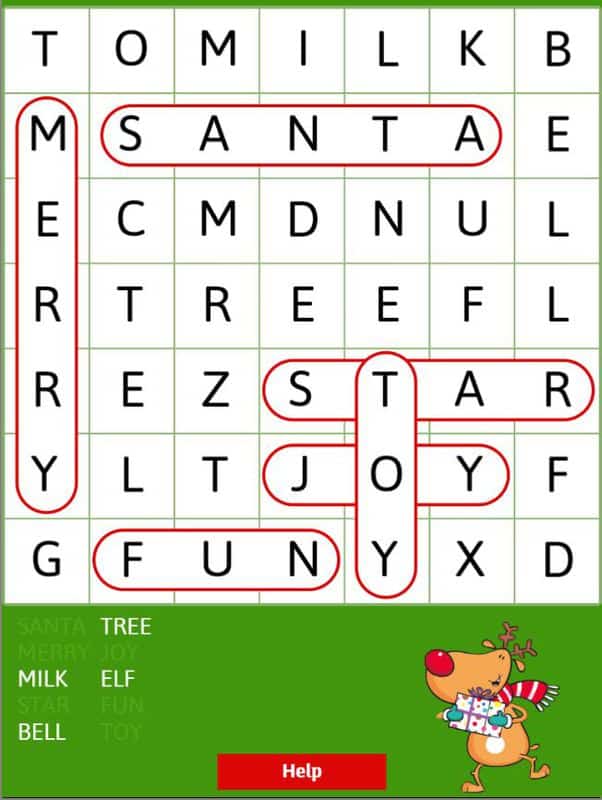
Word search puzzles are a fantastic way for children to familiarize themselves with new vocabulary in a visually stimulating format.
These puzzles consist of a grid of letters with hidden words placed vertically, horizontally, or diagonally. Kids must find and circle the words from a list provided alongside the grid.
Word searches can be tailored to various themes, such as holidays, seasons, or specific vocabulary sets, making them an excellent tool for reinforcing language lessons. We have loads here on the site
They enhance pattern recognition and concentration skills while providing a sense of accomplishment when all words are found. Parents and educators can create their own word searches using online tools, customizing them to include vocabulary words relevant to the child’s current learning focus.
Conclusion
Incorporating fun language games into a child’s learning routine can significantly enhance their language skills while keeping them engaged and motivated.
The variety of digital language games, such as educational apps, online language puzzles, and interactive e-books, offer dynamic and personalized learning experiences.
These tools leverage technology to make language learning accessible and enjoyable, catering to different learning styles and paces.
By integrating these diverse language games into educational settings, parents and educators can create a rich, engaging, and comprehensive language learning experience.
The key is to balance structured learning with playful activities, ensuring that children associate language learning with fun and excitement. Ultimately, these games not only help children master linguistic skills but also instill a lifelong love for language and learning.
Making English Fun!

I have been a teacher of English for over 15 years, in that time i made hundreds and thousands of resources and learnt so much i think its worth sharing. Hopefully to help teachers and parents around the world.