FREE Pre – K Dolch Sight Word Worksheets – ‘i’
The sight word “I” is fundamental in early literacy, representing the first person singular pronoun.
Essential for educators, ESL instructors, and parents, this guide includes a printable worksheet designed to help children recognize and use “I” effectively, facilitating personal expression and enhancing narrative skills in reading and writing.
you can see the full sets on the links below.
Significance of Sight Words
Sight words like “I” are critical for developing reading fluency. These words, often recognized instantly, streamline reading and bolster comprehension.
“I” is particularly important as it helps young readers understand and articulate personal experiences, thoughts, and feelings, serving as a cornerstone for engaging in self-expression and dialogue.
Overview of ‘I’
A detailed look at “I” and its usage offers clarity for educators and learners alike:
| Aspect | Details |
|---|---|
| Sight Word | “I” |
| Meaning | The first person singular pronoun used by a speaker. |
| Example | “I am happy.” |
| Type of Word | Pronoun |
Free Sight Word ‘I’ Worksheet
Our “I” worksheet is crafted to provide engaging practice, supporting young learners as they navigate the basics of personal pronouns.
High-quality, accessible educational materials are key to fostering equitable learning opportunities, enabling children from diverse backgrounds to advance their literacy skills.
Activities for ‘I’
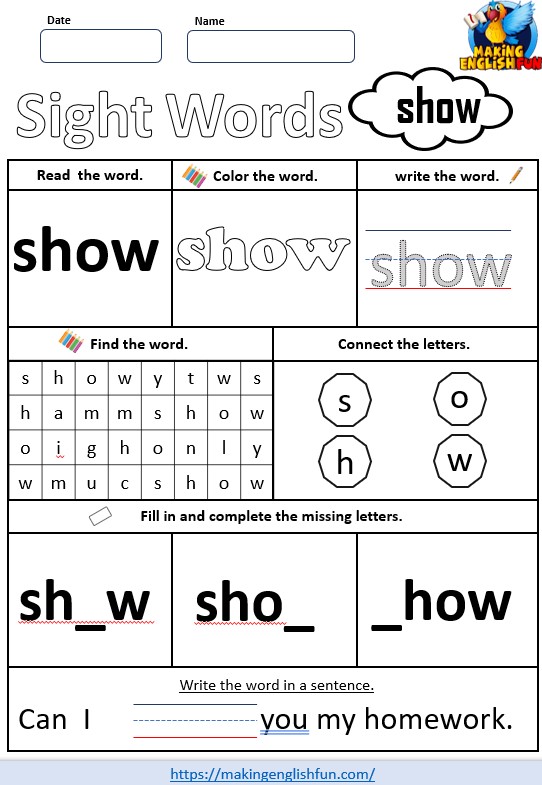
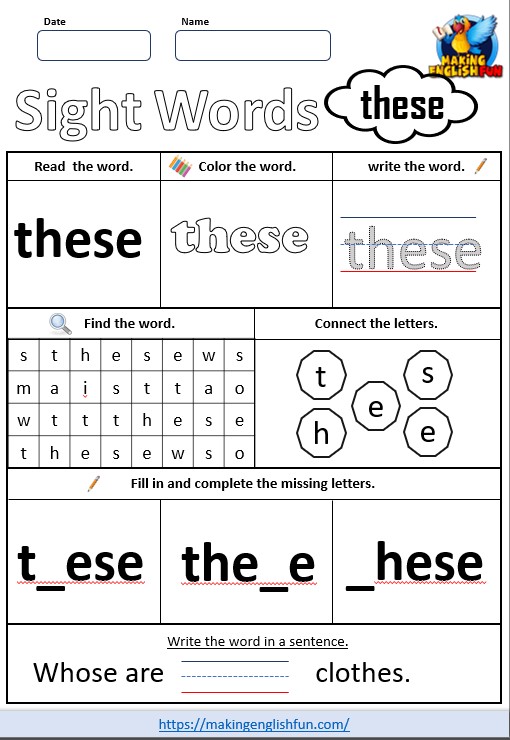
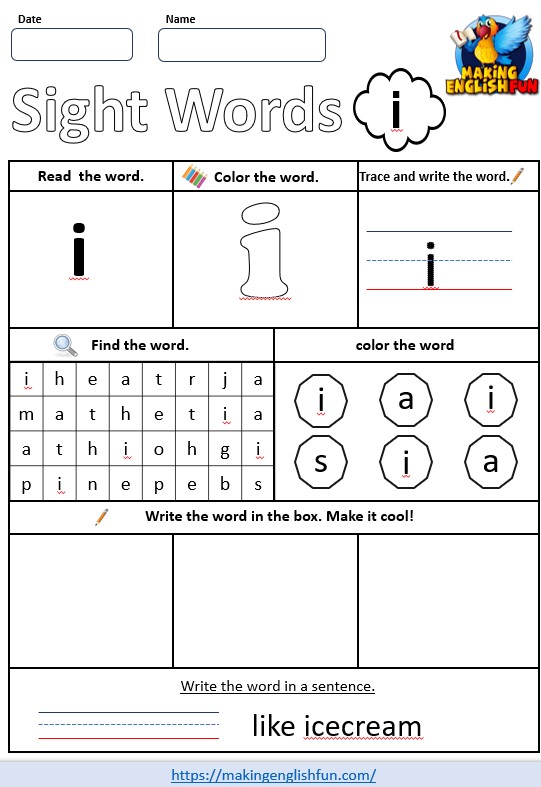
The worksheet for “I” includes:
- Tracing exercises to familiarize learners with “I.”
- Identification tasks to spot “I” in sentences, enhancing word recognition.
- Sentence construction activities using “I,” reinforcing its use in self-referential communication.
you can grab the single sight word worksheet below, and the links for the full sets of sight word Worksheets are below and above.
Using the ‘I’ Worksheet
Effective engagement with the “I” worksheet involves:
- Recognition: Encouraging the identification of “I” in various texts to build familiarity.
- Tracing and Writing: Including tracing practices for “I,” along with writing tasks to aid in memorization and recognition.
- Contextual Use: Facilitating the application of “I” in sentences to deepen understanding of its use in expressing personal identity and perspective.
Supplementary Learning Resources
To complement the worksheet, consider these additional resources:
- Digital Learning Tools: Use interactive games and apps that focus on “I” for fun, educational reinforcement.
- Flashcards: Flashcards featuring “I” can be a quick way to review and reinforce this essential word.
- Engaging Reading Materials: Select books and stories that use “I” frequently, encouraging discussion about personal experiences and viewpoints.
We have more sight word resources here on the site and you can access these resources below as well.
- 25 Sight Word Games
- Is There An Order To Teach Sight Words?
- Sight Word Spelling Worksheets
- How to teach Sight Words And What Are They?
- Sight Words Worksheets: set 1-20
- Sight Words Worksheets: set 21-40
- 25 Free Kindergarten Sight Word Worksheets.
Creative Learning Approaches
Enhance engagement with “I” through creative methods:
- Art Projects: Invite students to create self-portraits or drawings that express sentences using “I.”
- Writing Challenges: Promote writing simple sentences or short stories that use “I,” encouraging personal expression.
- Role-Playing Activities: Organize scenarios where children use “I” to describe themselves or their actions, bolstering verbal expression and comprehension.
Join Our Literacy Community
Our community is a rich source of teaching strategies, worksheets, and interactive activities focused on essential sight words like “I.”
It’s a supportive space for sharing resources and insights, aimed at nurturing early reading and writing skills.
Looking Ahead in Literacy
Keep an eye out for ongoing resources and updates aimed at enriching literacy education, including materials that support the teaching of fundamental sight words.
Together, we’re dedicated to providing young learners with the skills necessary for lifelong literacy and learning.
Together, we’re empowering children to confidently use “I” in their journey of literacy and self-expression, one word at a time.
Making English Fun!

I have been a teacher of English for over 15 years, in that time i made hundreds and thousands of resources and learnt so much i think its worth sharing. Hopefully to help teachers and parents around the world.