Receipt or Reciept: Which is the Correct Spelling?
We all know that English spelling can be challenging, especially with words that contain tricky vowel combinations.
A common example of such complexity is found in distinguishing between “Receipt” and “Reciept.”
The correct spelling of this word is essential for effective communication, particularly in financial, commercial, and legal contexts.
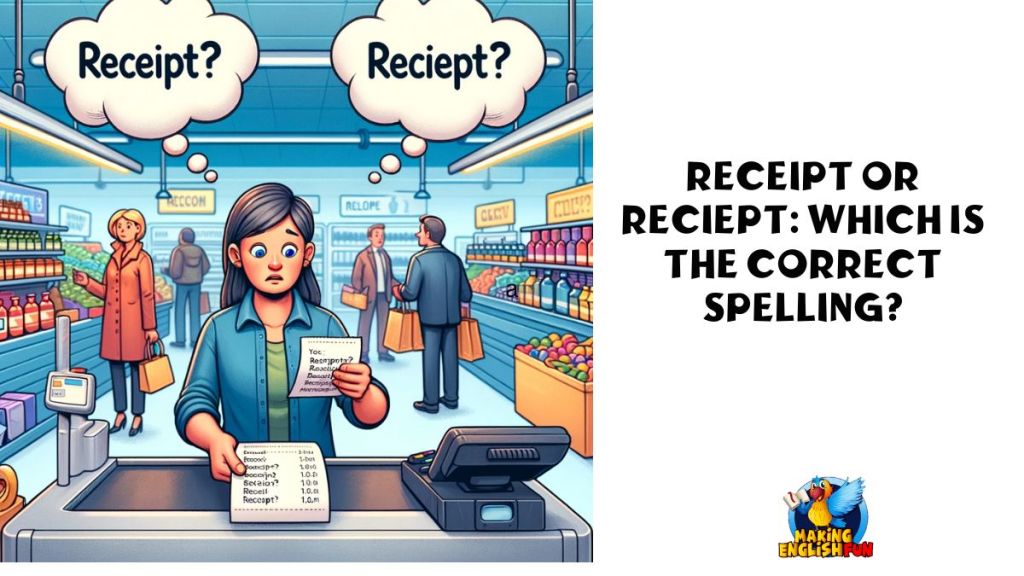
This article aims to clarify the correct spelling of “receipt” and provide insights to help you remember and use it accurately, whether you’re handling financial transactions, organizing documents, or discussing proof of purchase or payment.
Correct Spelling and Definition
The correct spelling is “Receipt,” with ‘e’ before ‘i’.
A receipt is a written acknowledgment that a specified article or sum of money has been received. It serves as a record for purchases or transactions. For example, “Please keep your receipt as proof of purchase.”
Common Spelling Error: Reciept
The incorrect spelling “Reciept,” with ‘i’ before ‘e’, is a common mistake.
This error might arise from the misapplication of the ‘i before e, except after c’ rule, which actually supports the correct spelling in this case. However, “Receipt” is an exception to this rule and is spelled with ‘e’ before ‘i’.
Comparison with Other Common Spelling Confusions
“Receipt” is among several English words that are often misspelled.
Here’s a comparison table showcasing some common spelling challenges:
| Correct Spelling | Common Incorrect Spelling |
|---|---|
| Receipt | Reciept |
| Believe | Beleive |
| Friend | Freind |
| Ceiling | Ceilling |
| Deceive | Decieve |
This table emphasizes the importance of understanding and memorizing the correct spellings of commonly used words, particularly those with ‘ei’ and ‘ie’ combinations.
Etymology and Historical Development
“Receipt” comes from the Old Norman “receite,” derived from the Medieval Latin “recepta,” meaning ‘received.’
The spelling of “Receipt” in English, with ‘e’ before ‘i’, has been consistent over time, reflecting its origin and linguistic journey.
Usage in Different Contexts
“Receipt” is used in various fields and contexts. In retail and commerce, it refers to the document provided after a transaction. In accounting and finance, it serves as proof of payment.
Accurate use of “receipt” in these contexts is crucial for clear and effective communication.
Tips for Remembering the Correct Spelling
To remember the correct spelling of “Receipt,” focus on the word ‘receive,’ which shares the same ‘e’ before ‘i’ pattern.
Regular exposure to financial documents, shopping experiences, and accounting practices can reinforce the correct spelling.
Conclusion
Understanding and correctly using the word “Receipt” is vital for precise communication in various financial, commercial, and legal contexts.
Accurate spelling not only ensures clarity but also reflects a strong command of the English language and an understanding of business transactions.
FAQs and Reader Questions
- How can I improve my spelling of English words with ‘ei’ and ‘ie’ combinations?
- Regular reading, writing, and engaging in spelling exercises or quizzes can significantly improve your spelling abilities.
- Are there digital tools that help with learning English spelling?
- Yes, various spelling and grammar checkers, educational apps, and online resources provide tools for learning and improving English spelling.
- Why is correct spelling important in financial documentation?
- In financial documents, correct spelling is crucial for maintaining accuracy, clarity, and professionalism.
- Do native English speakers often make spelling errors like ‘Reciept’?
- Yes, misspellings can occur, especially in words that deviate from common spelling rules.
- Can incorrect spelling affect the credibility of financial records?
- Yes, consistent spelling errors in financial records can impact their credibility and the accuracy of financial tracking.
Further Resources
- https://languagetool.org/insights/post/spelling-receipt/#:\
- https://strategically.co/blog/grammar-tips/how-do-you-spell-receipt/
- https://inkforall.com/copy-editing/spell-check/how-do-you-spell-receipt/
Making English Fun!

I have been a teacher of English for over 15 years, in that time i made hundreds and thousands of resources and learnt so much i think its worth sharing. Hopefully to help teachers and parents around the world.