Believe or Beleive: Which is the Correct Spelling?
In English, one common area of spelling confusion involves words with the ‘ie’ or ‘ei’ letter combinations.
This is particularly evident in the frequent mix-up between “Believe” and “Beleive.”
The correct spelling of these words is crucial for effective communication, especially in writing that involves expressions of conviction, faith, or acceptance of a truth.
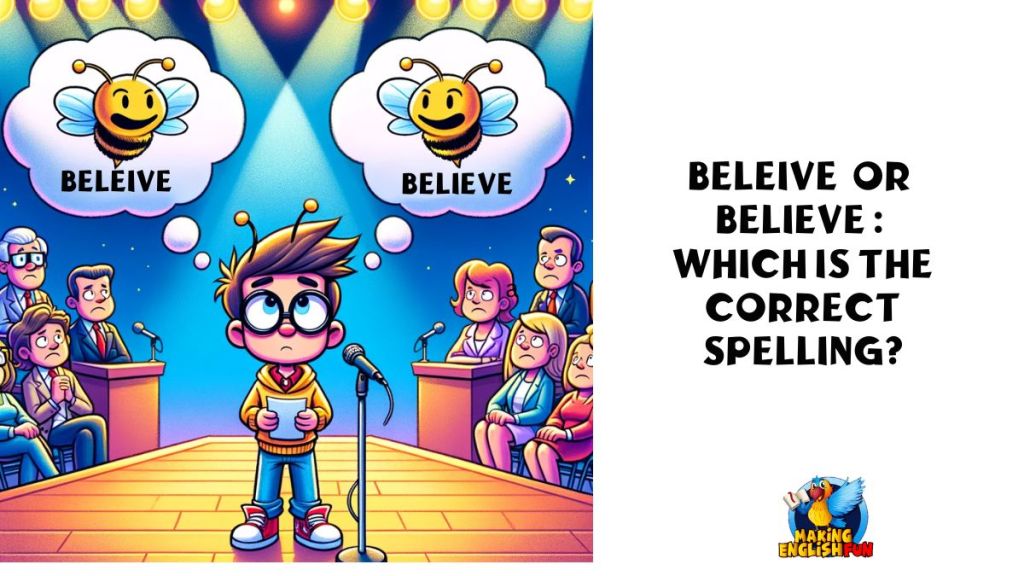
This article aims to clarify the correct spelling of “believe” and provide insights to help you remember and use it correctly in various contexts.
Correct Spelling and Definition
The correct spelling is “Believe,” with ‘ie’ following the ‘l’.
“Believe” means to accept that something is true or exists, to have faith in, or to trust.
For example, “Many people believe in the power of positive thinking,” demonstrates the use of “believe” in the context of faith or conviction.
Common Spelling Error: Beleive
The incorrect spelling “Beleive,” with ‘ei’ after ‘l’, is a common mistake.
This error often occurs due to the misapplication of the well-known rule ‘i before e, except after c’.
However, “Believe” is an exception to this rule.
Comparison with Other Common Spelling Confusions
Like “Believe,” other words in English often get misspelled due to the confusion over ‘ie’ and ‘ei’ placement.
Here’s a comparison table showcasing some common spelling challenges:
| Correct Spelling | Common Incorrect Spelling |
|---|---|
| Believe | Beleive |
| Receipt | Reciept |
| Friend | Freind |
| Ceiling | Ceilling |
| Leisure | Liesure |
This table emphasizes the importance of understanding and memorizing the correct spellings of commonly used words.
Etymology and Historical Development
The term “Believe” comes from the Old English “beliefan,” which means ‘to believe, to trust.’
The spelling of “Believe” with ‘ie’ has been consistent throughout its history in the English language, tracing back to its Germanic roots.
Usage in Different Contexts
“Believe” is used in various contexts to express trust, faith, or acceptance. In religious or spiritual discussions, it often pertains to faith in a higher power or doctrine.
In everyday language, it can refer to trusting or accepting something as true, such as in “I believe you’re right.”
Tips for Remembering the Correct Spelling
A useful tip for remembering the correct spelling of “Believe” is to associate it with the word ‘lie’ within it, as in “Never believe a lie.”
This mnemonic can help remember that the ‘i’ comes before ‘e’ in “Believe.”
Regular reading and writing, particularly in contexts that involve expressions of faith or opinion, can also reinforce the correct spelling.
Conclusion
Mastering the spelling of “Believe” is vital for clear and articulate communication, particularly in writing that involves expressions of opinion, trust, or faith.
Correct spelling not only ensures clarity but also reflects a strong command of the English language.
FAQs and Reader Questions
- How can I improve my spelling of words with ‘ie’ and ‘ei’ combinations?
- Practice, reading widely, and engaging in spelling exercises or quizzes can significantly improve your ability to spell these words correctly.
- Are there any digital tools for learning English spelling?
- Yes, numerous apps and online platforms offer spelling games, exercises, and tests that are helpful for learning English spelling.
- Why is correct spelling important in formal writing?
- In formal writing, correct spelling is crucial as it contributes to the clarity, professionalism, and overall quality of the communication.
- Do native English speakers commonly make spelling errors like ‘Beleive’?
- Yes, even native speakers can confuse these spellings, especially with words that have exceptions to common spelling rules.
- Can incorrect spelling affect the readability of a text?
- Yes, consistent spelling errors can disrupt the flow of reading and may lead to misunderstandings or a perceived lack of credibility.
Further Resources
- https://inkforall.com/copy-editing/spell-check/how-do-you-spell-believe/
- https://www.gingersoftware.com/english-online/spelling-book/misspelling/believe-belive-beleive
- https://paperpal.com/blog/academic-writing-guides/language-grammar/i-before-e-except-after-c-rule
Making English Fun!

I have been a teacher of English for over 15 years, in that time i made hundreds and thousands of resources and learnt so much i think its worth sharing. Hopefully to help teachers and parents around the world.