Receive or Recieve: Which is the Correct Spelling?
A frequent point of confusion in English spelling is the correct order of letters in words, especially those containing the ‘ie’ or ‘ei’ combinations.
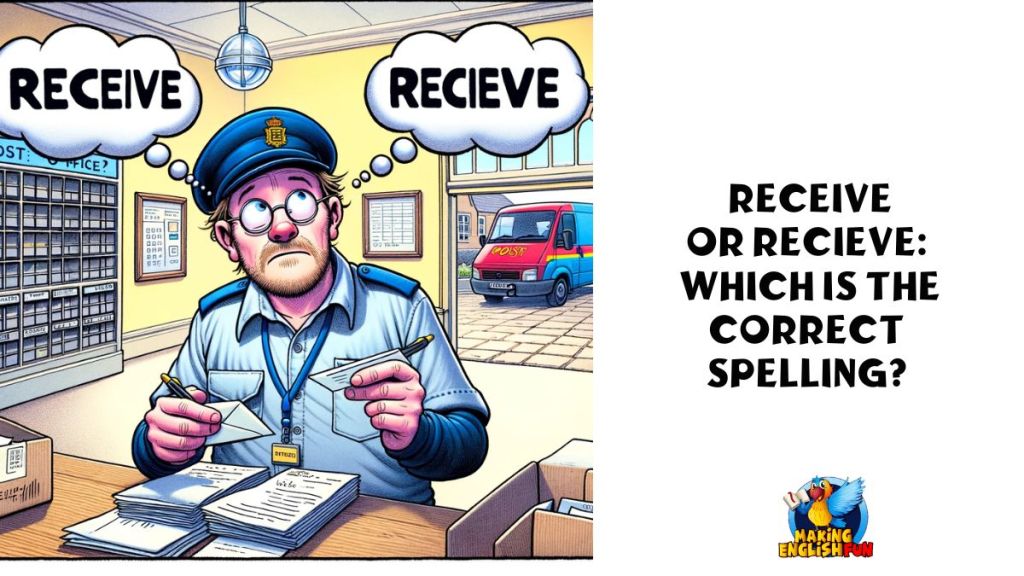
A common example of this is the uncertainty between “Receive” and “Recieve.” This confusion stems from the English language rule often summarized as “i before e, except after c,” which can lead to mistakes in spelling.
The word “receive” is widely used in various contexts, from business communications to personal messages, making its correct spelling vital for clear and effective communication.
This article aims to clarify the correct spelling of “receive” and provide easy-to-remember guidelines to help you use it correctly in your writing.
Correct Spelling and Definition
The correct spelling is “Receive,” following the rule of “i before e, except after c.”
The word “receive” means to be given, presented with, or paid something.
For example, “She will receive the package tomorrow,” clearly indicates that she will be given the package.
Common Spelling Error: Recieve
The incorrect spelling “Recieve,” with ‘ie’ after ‘c’, is a frequent error. This mistake is often made due to overlooking the “i before e, except after c” rule, which can be confusing to many.
However, the rule applies in this case, making “Receive” the correct spelling.
Comparison with Other Common Spelling Confusions
Here’s a comparison table showcasing other words that are commonly confused due to the ‘ie’/’ei’ rule:
| Correct Spelling | Common Incorrect Spelling |
|---|---|
| Receive | Recieve |
| Believe | Belive |
| Chief | Cheif |
| Deceive | Decieve |
| Field | Feild |
This table not only emphasizes the correct spelling of “Receive” but also illustrates the importance of understanding the ‘i before e’ rule in English.
Etymology and Historical Development
The word “receive” has its origins in the Middle English “receiven,” which was derived from the Old French “receivre,” based on the Latin “recipere.” This Latin term is a combination of “re-” (back) and “capere” (to take), literally translating to “take back.”
The historical spelling has consistently used the ‘ei’ after the ‘c’, aligning with the established rule and reinforcing the correct spelling as “Receive.”
Usage in Different Contexts
“Receive” is a versatile word used in various contexts, such as receiving items, information, or guests.
- In business, one might discuss “receiving an order” or “receiving feedback.”
- In personal scenarios, it could be about “receiving guests at home.”
Accurate spelling of “receive” in these contexts is important for maintaining professionalism and clarity in communication.
Tips for Remembering the Correct Spelling
A simple tip for remembering the correct spelling is to recall the rule “i before e, except after c.”
Associating “Receive” with this rule can help ensure that you spell it correctly.
Another helpful approach is to remember that “Receive” is about “receiving something,” which places the ‘e’ before the ‘i’.
FAQs and Reader Questions
Q1: Are there exceptions to the “i before e, except after c” rule?
Yes, there are exceptions like “weird,” “seize,” and “either” where the rule doesn’t apply, which is why it’s essential to also memorize some of these common exceptions.
Q2: Why is it important to spell words like “receive” correctly in professional communication?
Correct spelling in professional communication is crucial as it reflects your competence and professionalism. Incorrect spelling can undermine the message’s credibility.
Q3: Can learning about word origins help with spelling?
Yes, understanding a word’s etymology can provide insights into its correct spelling and enhance your overall language skills.
Q4: How can I improve my ability to remember correct spellings in English?
Regular reading, writing practice, using spelling tools, and engaging with language learning apps can significantly improve your spelling skills.
Q5: Is it common for English learners to confuse spellings like “receive” and “recieve”?
Yes, it’s a common challenge for English learners due to the complexities of English spelling rules and the language’s many exceptions.
Further resources
- https://recieved.co.uk/
- https://www.gingersoftware.com/english-online/spelling-book/misspelling/receive-recieve-receiv
- https://drawingsof.com/spell-receive-or-recieve/
Making English Fun!

I have been a teacher of English for over 15 years, in that time i made hundreds and thousands of resources and learnt so much i think its worth sharing. Hopefully to help teachers and parents around the world.