Which is Correct – High School or Highschool?
When you’re writing, it can be sometimes tricky to remember the rules surrounding the many compound words that exist within English. Compound words are single expressions that are made up of more than one word. They are broadly categorized into three categories: open, closed, and hyphenated compound words.
The phrase “high school” is typically written as two words, without a hyphen. However, when used as an adjective before a noun, such as in “high-school student” or “high-school diploma,” it is often written with a hyphen to indicate that it is a single unit modifying the noun.
So when referring to the school that we attend from grades 9 to 12, what construction of compound words should we be using?
- Open — High school
- Closed — Highschool
- Hyphenated — High-school
Quite note before we jump into it
When exploring how compound words are used in other languages, a reliable tool to translate can provide extra clarity and context, especially for nuanced meanings.
Which is Correct: High School, Highschool, or High-School?
High school is an open compound word, which means there should be a space in between the two words. Unlike closed compound words such as “keyboard” or “supermarket,” high school always has a space, and thus “highschool” is always wrong. he hyphenated version “high-school” is only used when the word is being used as a modifying adjective.
This can be especially useful in academic contexts where clear distinctions between different types of schooling are necessary – sometimes even helping to clarify specific educational levels in writing assignments or research papers. If you’re struggling to make these distinctions, resources like EssayPro can assist in ensuring proper usage and grammar in your work.
Open Vs. Closed Compound Words
Compound words abound within the English language, and most of them exist as either “open” or “closed” compound words, as we’ve mentioned above. Common examples of open compound words include:
- Real estate
- Peanut butter
- Ice cream
- No one
- High school (as well as elementary school)
- Common sense
- Cotton candy
- …and many more
Common examples of closed compound words include:
- Keyboard
- Supermarket
- Comeback
- Bedroom
- Brainstorm
- Grandmother
- Basketball
- Sunflower
- …and many more.
Hyphenated Compound Words
There are some compound words that are always hyphenated, even when they are not being used as an adjective, such as:
- Mother-in-law
- Merry-go-round
- Left-handed
- Self-centered
- Knee-length
- …and so on
As we’ll see further below, open compound words can sometimes become hyphenated ones when they are being used as an adjective. This is also the case with our focus term, “high school.”
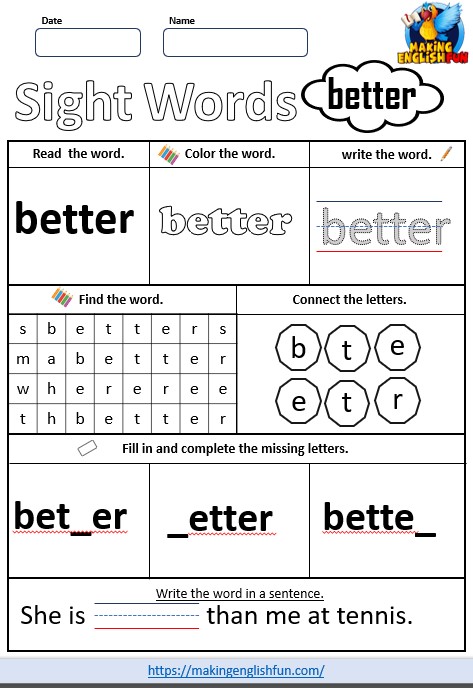
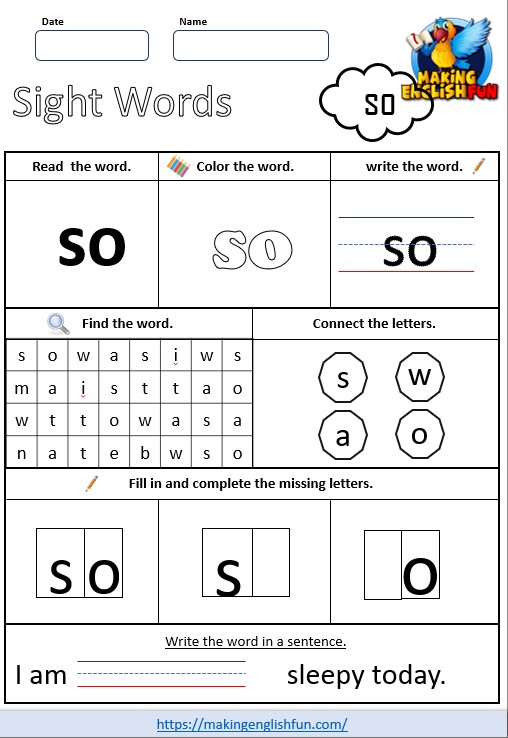
We have compound word worksheets for free download here on the site yo can check the link here or the image below.
High School or High-School?
So, we’ve established that “highschool” is always incorrect, regardless of context, but what about the two remaining approaches? The regular spelling for the word is “high school” with a space in between the words, but the hyphenated form can be correct depending on usage. Specifically, you need to add a hyphen when using high school as an adjective.
Examples:
- I attended high school from 2016 to 2020 — should be open, with space, no hyphen
- Math was a compulsory high-school course that I took — high-school modifies “course” so it is an adjective, and should be hyphenated
So, if you’re already familiar with the rules surrounding hyphenation for adjectives, you can apply them to high school in the same way. It’s easy to avoid, however, if you are ever unsure, since you can just tweak your sentence to use the regular noun form instead. Let’s take the above hyphenated example to demonstrate how:
- Adj — Math was a compulsory high-school course that I took.
- Noun — Math was a compulsory course that I took in high school
In the second one, we’ve shifted high school to become its own object, rather than a modifier for the object as we see in the other sentence. Therefore, when in doubt, construct your sentences to suit the noun form, and include a space.
Below we have included a few more examples to get you thinking:
“High School”
- What are some of your best memories of high school?
- Who was your favorite teacher in high school?
- Was your high school in a good neighborhood?
“High-school”
- For me, math was the hardest high-school subject
- Do you ever keep in touch with your high-school sweetheart?
- Did you ever play high-school football?
Capitalization: “High School” or “high school”?
Even after we have established that “high school” is correct, “highschool” is incorrect, and “high-school” correct on the right occasion, some might still be wondering about capitalization. After all, whichever school we went to, we all saw quite plainly on the sign outside the gates that it was written “High School.” That being so, why have we written it as “high school” so many times in our blog so far? Which is right?
Actually, both are right, depending once again on the circumstances. We would use “High School” when the words are part of a proper noun, IE the name of an individual high school, but we would use “high school” with lowercase letters as the more generic, general term.
Example:
- I studied at Martin Luther King Jr. High School in Topeka, Kansas
- When I was in high school, life seemed so much simpler!
In this example, the first one refers to a specific school, which has a name that is considered a proper noun, and is thus capitalized. The second one is speaking more generally about one’s high school years, without referring to the specific school.
Similarly, one should also capitalize even if you are shortening the name to “High” as many do — Jefferson High, for example, instead of Thomas Jefferson High School.
What’s the Difference Between “High School” and “Secondary School”?
Increasing globalization in education is seeing different terms from around the world start to intermingle, which is creating confusion for some people. One particular area is that of so-called “secondary schools.” What are these? Are they the same as high schools? If not, what are the differences? We’ll briefly explain in this section.
The term “secondary school” is used more frequently in the United Kingdom, and countries with a similar education model as the UK — England and Wales in particular. In England, public schools are set up as primary schools that cater from ages 5-11 (Years 1-6), and then secondary schools which cater from ages 11-16 (Years 7-11), and often the optional years 17-18 as well (Year 12-13, aka “Sixth Form”).
So, if and when you see secondary schools being used within the North American sphere, you can know it’s referring to both middle/junior high schools, and high schools, with perhaps just a few differences around the grade boundaries. Grammatically speaking, secondary school is the same as high school in that it is an open compound word that only needs to be hyphenated when being used as a modifying adjective.
Conclusion
As with so many answers when we discuss English grammar, the answer to the question is high school, or High-school correct can depend on its use.
Simply put high school is most likely correct when you come to use it, the exception (always an exception!) High school will become high-school when using the term and an adjective
Exploring learning is very fun, and the learning process is also gradual. Of course, it is very important to have the right tools when learning, such as customizing a pen that suits your heart.
Incorporate your favorite elements into the design of the pen, and the exquisite workmanship can make you feel intimate and meticulous. Giving the Custom Pens as gifts to classmates or friends is also a good choice.

References
- https://prowritingaid.com/is-highschool-one-word#:~:text=So%20which%20spelling%20is%20correct,word%20correctly%20in%20your%20writing.
- https://oneminuteenglish.org/en/highschool-or-high-school/
- https://www.tprteaching.com/highschool-or-high-school/
Making English Fun!

I have been a teacher of English for over 15 years, in that time i made hundreds and thousands of resources and learnt so much i think its worth sharing. Hopefully to help teachers and parents around the world.